
About Greg-Gary’s Amazing Thailand Home
(and yacht)

So . . . about Greg-Gary’s amazing house and equally amazing yacht in the latest season of The White Lotus.
Early in the new season of The White Lotus that ended two weeks ago, viewers were treated to the sight of the psychopath Greg alive and well and living large in his incredible Thailand home and 177-foot catamaran SpaceCat yacht. (Fun fact, you can charter it for a mere $175,000/week).
Viewers of the first two seasons were somewhat perplexed as to how such a horrible human being came to be so filthy rich.
For that we have to look back at Tanya (the great Jennifer Coolidge), a character unfortunately no longer with us. Tanya was an heiress. All we really ever knew about her was that she is a hot mess; she was wealthy beyond measure; she married Greg even though she had only known him for weeks; and she was oblivious to the real world except for a few, fleeting moments of utter clarity.
The second season revolved in part around Tanya’s marriage and the very evident fact that her life was in danger. Greg and a group of friends were out to kill her so Greg could inherit her enormous wealth and his friends could live lives of leisure.
That plot point was reinforced by this fact, dropped over a sumptuous meal: Tanya and Greg had a prenuptial agreement that stated that if Tanya died before Greg, Greg got everything, including all of her mother’s fortune. It protected Tanya in case of divorce but left that door open.
We can only see three reasons the prenup was written that way: Tanya was sure she would outlive Greg; Tanya didn’t care about the money after her death (and had no one to give it to in any event); or the lawyer who drew up the prenup screwed up royally.
Our money is on the third possibility. This doesn’t necessarily mean that the lawyer made an error in drafting, or misconstrued what Tanya wanted for her marriage. It most likely means that the lawyer drafted a solid prenup and that’s it. Job finished.
They saw the prenup as a problem to be solved and missed the big picture. It needed to be done with an estate planning attorney. Working in tandem would have ensured that the estate was in line with the prenup.
There wouldn’t have been the gaping hole that Greg and his friends tried to exploit . . . and Tanya would have been in the new season (it needed her).
“Your biggest mistake . . .
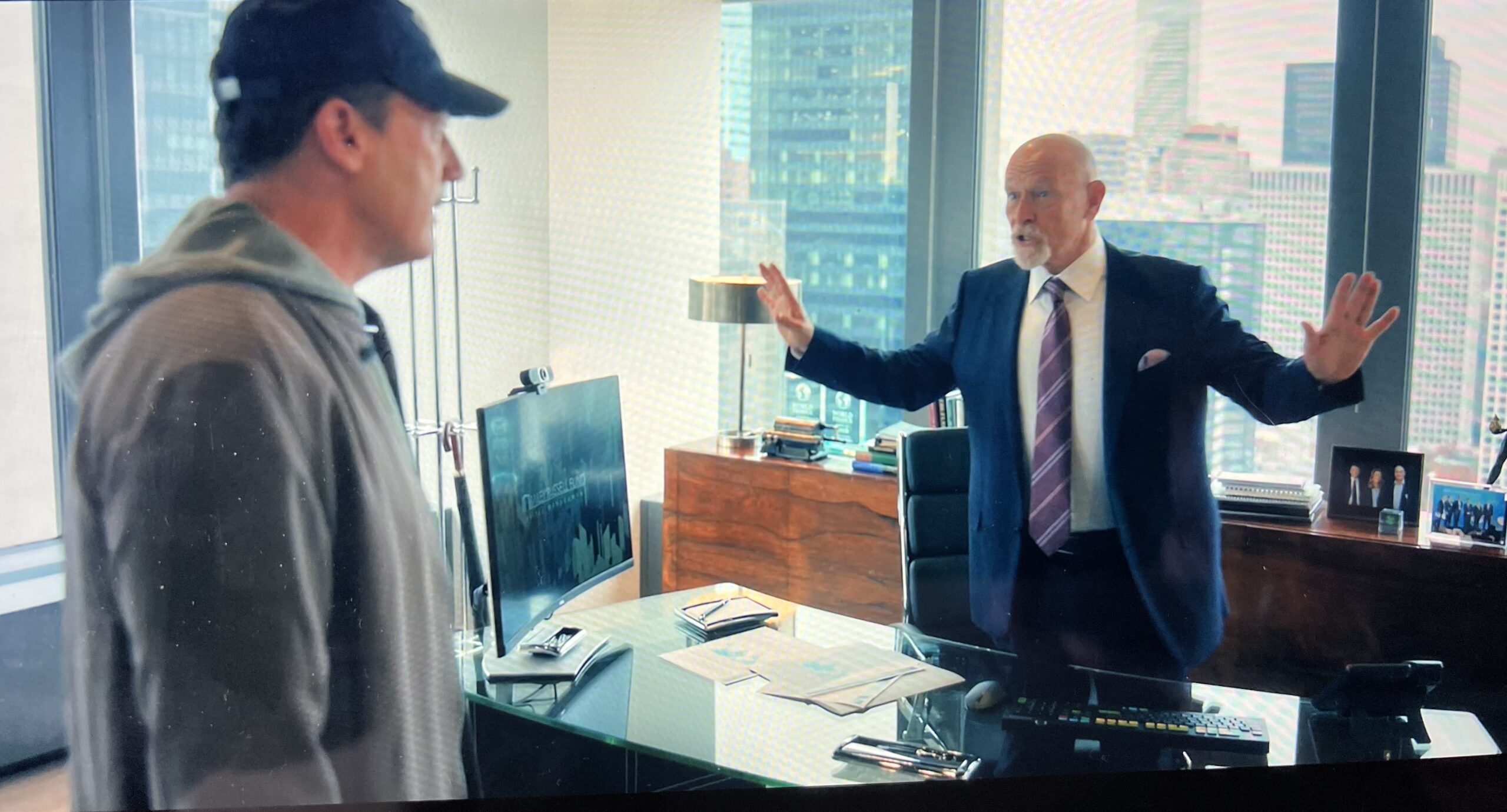
. . . was thinking any of this was ever yours.”
That’s a line from the first episode of Apple TV’s Your Friends & Neighbors. It’s not giving anything away – since it’s in the trailers – to note that the show starts when a hedge fund trader, Andrew Cooper (Jon Hamm), is fired by the fund’s principal owner, Jack Bailey (Corbin Bernsen) and is launched on a new career of burglarizing, well, his friends and neighbors’ homes.
Coop was fired solely because he could be fired without repercussion. As he finds out when he tries to negotiate his separation and Bailey responds, “You should have read your contract.” That stops Coop for not a second, he relies, as if it will change things, “I was so happy to get my own trading desk I just signed.”
Cooper had been trading his own funds in his portfolio, something clearly not part of his contract – not that he knew it.
The line above is snapped by Bailey when Coop tries the time-honored (and still winless) last refuge of people who did not hire their own lawyers to review their employment agreements: “It’s not fair, I’m just asking for what’s mine.”
Online Reviews

When is a review business defamation?
A fantasy novelist signed a two-book contract with Del Ray Books, the sci-fi/fantasy imprint of Penguin Random House. A big deal, indeed. The start of a profitable writing career.
Or it would have been if the author, Cait Corrain, hadn’t set up at least a half a dozen fake accounts on Goodreads and began to post positive reviews of her upcoming novel while ‘review bombing’ dozens of other debut fantasy novelists. In other words, she boosted her reviews while driving her perceived competitors’ ratings down. Way down.
When it finally came to light in December ‘23, Del Rey Books pulled her book – due to be published in early May ‘24 – from distribution and voided her contract, undoubtedly invoking a ‘morals clause.’ Her agent dropped her shortly after.
The authors who had their ratings cratered still have [apparently] taken no legal action against Goodreads. It should be noted that Goodreads does not take down reviews, ever. When authors sign up, they assure them that they had safeguards in place to ensure something like this could not occur.
You Defamed My Business!
Let’s consider two one-star Yelp reviews:
1. “You’re bad, you’re company’s bad, you’re [sic] product is terrible, I would never work with you again, and I urge anyone with an ounce of sense and smidgen of business acumen to avoid your company at all costs.”
2. “They are fraudulent, cheating and deceitful, and it starts at the top!!!! . . . “Cheats there [sic] customers on initial order, adds a fake order and then makes up a series of fake invoices to cover his lies. Both of the principals were in on this scam.”
Yes, they are both hideous reviews. Both will raise very large, very red flags for anyone researching their services. The first is clearly somebody’s opinion – sharp as it is.
The second one just cost the reviewer $90,000. A court found that it was “defamatory because it was both false and malicious.”
Defamation and business have gone together since the first caveman sold the first wheel. ‘Business defamation’ is the act of spreading false statements about a person or business with the explicit intent to harm the business’s reputation.
It looks simple on the page, in practice it’s, to be kind, complex. It’s a malicious, intentional act and in 2024 there are a thousand-thousand ways to do it if one wants. In this, the age of the viral post, it doesn’t take much to ‘get it out there.’ A single tweet, a one-star review, an Instagram post, a Tik Tok or YouTube video can be viewed by thousands, hundreds of thousands, even millions seemingly overnight.
That’s not including, of course, sites like Yelp, Google Reviews, and profession-specific sites like Avvo for law firms. They all empower consumers and clients to share their experiences and rate the company.
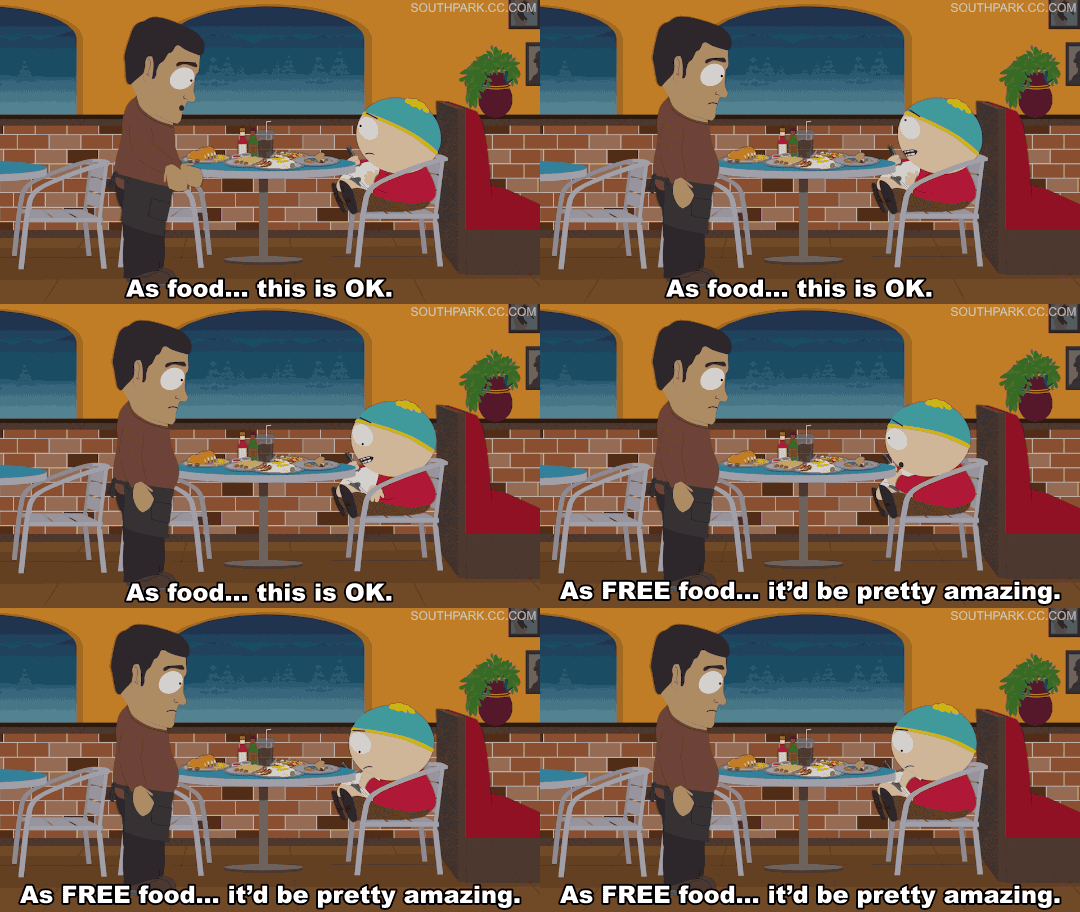
In some cases, as immortalized in an iconic South Park episode, the reviewers let the power go right to their heads. Yet, not even Cartman defames the businesses he terrorizes with his demands.
A thin line can separate a bad review from defamation. The truth, though, is an absolute defense (though you really – REALLY – should get a legal opinion on that before you hit the enter key).
A lesson: yes, the reviewer was ordered to pay $90,000 . . . but the business originally sued for $675,000. The reason they didn’t come close to that number, as cited [repeatedly] by the judge was the owner’s online responses to the reviews – “heated exchanges, which quickly escalated to crude insults.”
Don’t try to ‘fight back’ yourself. No one ever won arguing with the Cartman’s of the world.
We Watched A Body in the Snow . . .

. . .so you don’t have to (thank us later)
After wall-to-wall media coverage including live on CourtTV as it occurred and now a five-part documentary on Max, A Body in the Snow: the Trial of Karen Read the retrial, a jury was just seated this week, is about to begin. Before it goes live again, here’s our review of the series.
So, about the series . . . eh. Karen Read authorized it before her first trial began, and it does offer somewhat unprecedented looks into the defense’s investigation, conversations (that, it needs to be pointed out, were privileged before the cameras rolled in), strategy, and reactions after every day of the month’s long gruel fest that was the trial.
But here’s the thing: the way it’s presented feels like an extended episode of Law & Order: Bizarro World—with the defendant cast as the lone crusader, out to solve the mystery and bring the real culprits to justice.
It makes for gripping television. What it doesn’t make is a reflection of how criminal trials actually work.
There are no surprises in court. None. Not from the defense, not from the prosecution, not from a witness who suddenly “remembers something.” The defense doesn’t hold onto evidence for a dramatic reveal. They can’t. Discovery rules are clear: both sides exchange the evidence they intend to present, and judges don’t have a lot of patience for last-minute drama.
What the defense is allowed to do—what it’s supposed to do—is tell the story differently. To take the same facts and reframe them. To point out what’s missing, what’s unclear, what doesn’t line up, and what flat out doesn’t make sense. They’re allowed to press on bias, on inconsistencies, on assumptions made early and never revisited.
That’s how you create reasonable doubt—not by spinning a mystery or springing a surprise, but by getting the jury to look at the state’s case and think, “wait a minute …”
And to be fair, Read’s attorneys did that very well. They told a better story—at least a more engaging one. The prosecution was plodding and forgettable. Their presentation rarely sparked the jury’s interest. Had Read’s defense team played it the same way—matching that slow pace, sticking to a dry procedural tone—it’s hard to imagine she wouldn’t already be in prison.
That brings us back to the documentary—and everything else.
Karen Read is now on record everywhere. The Max series. A long, detailed Vanity Fair feature. Countless clips. Public statements. Media appearances. While it may feel like she’s simply been defending herself in the court of public opinion, that’s a massive violation of the one rule that never changes about every legal matter:
Don’t talk to anyone about your case.
If she loses this new trial, the feeling here is it will [only] be because of something she said or did in one or more of her so many appearances.

Don’t Miss an Issue
Haven’t subscribed yet? Agree with Homer? Then don’t miss another issue, subscribe now. And . . . if you know someone who may enjoy this, please feel free to forward this issue to them.