
A Ronaldo Problem
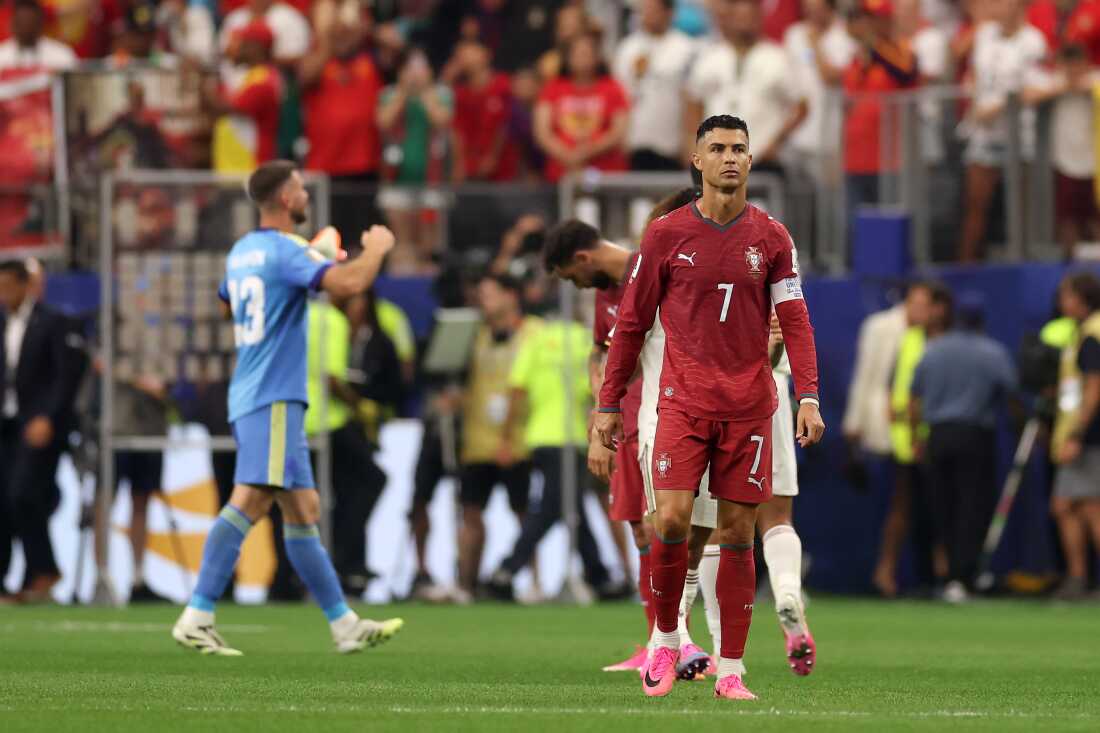
The World Cup final is Sunday at MetLi . . . er … New York-New Jersey Stadium (whatever that is). Portugal is not there. That wasn’t the plan. Portugal came in as one of the favorites… a deep, young, dynamic team built around, well, that was always the question: was it built around Cristiano Ronaldo, or built despite him?
For the uninitiated: Ronaldo, the aging superstar (the face of international football before Messi and Mbappé and Haaland) has a career spanning six World Cups. The face of Portuguese football even while his national teams suffered losses ranging from heartbreaking to humiliating. In Qatar in 2022, his manager benched him early. He was a late sub against Morocco in the quarterfinals, only to walk off in tears. The one major trophy Portugal did win, the 2016 European Championship, was mostly without him, after he limped off in the 25th minute of the final; he spent the rest of the night coaching, uninvited, from the sideline.
Here’s the thing about Ronaldo: no one’s ever accused him of underestimating his importance. This is a man who opened a museum dedicated to himself while still in his twenties. When things soured at Manchester United in 2022, he made a TV appearance to explain, at length, how the club had betrayed him.
Thirty-seven years old and a legend, he had a lot of options after Man U. Instead, he went to the Saudi Pro League. The American football equivalent would be Tom Brady walking off the field after the playoff loss to the Cowboys in January 2023 and immediately signing with the UFL to rack up more passing yards and touchdowns. For a certain kind of person, adding to one’s numbers is the whole point.
In the opener, Portugal tied DR Congo 1-1. The most memorable moment launched a thousand memes: Ronaldo cut across the passing lane to take a perfect ball headed for a wide-open teammate—Bruno Fernandes, one of the best in the world—and shot it wide. The cameras caught Bruno, arms up in the universal sign of ‘what are you doing?’
Thierry Henry, one of the greats (as a striker and a pundit), was typically blunt: “One thing that’s important, people, please, at home: the team needs to score, not you need to score.”
The numbers from Ronaldo’s final World Cup are startling: he played every minute of every game. He created zero chances for teammates. Zero. He took 17 shots, a World Cup record no one wants and it’s his by a lot. If there is a statistic for narcissism on the pitch, that’s it and it’s a perfect score. Compare his peers: Kane, Mbappé, Messi, Haaland. They drag defenders away from their teammates, open space for them, then loop into the space they created. The greatest goal scorers alive spend most of every game making room for other people.
Portugal went out to Spain, its biggest rival, in the biggest tournament on earth. Ronaldo left in tears, with “a clear conscience.” He’d given his all. His manager resigned on the spot, a generation of brilliant teammates never got to find out what they could be, and he made it about him.
If you’re nodding along, you may have a Ronaldo problem of your own. We tend to get involved when it shows up in two places.
First: at home. Your spouse has quietly become the organizing principle of the whole household. They control everything. Silent protests, like Bruno’s, become your go-to. Decisions that should be made together are impossible, because you’re never getting the ball from them.
The second is at work. One owner’s needs become the organizing principle of the whole business. They cut across the passing lane all day, every day. Every deal is their deal, every client is their client. Meetings get shorter, then stop altogether. Decisions are made the way FIFA’s VAR system works (see below). Ask to see the books and you get a shrug. Your silent protests, like Bruno’s, become your go-to. Arms up.
When it all finally falls apart (and it will), the Ronaldo in the story—the spouse, the partner—will stand in the middle of the wreckage, genuinely tearful, and talk about their clear conscience. They will believe every word.
Henry’s line is true well beyond the pitch. Every marriage is a team. Every business is a team. The team needs to score.
Red Cards
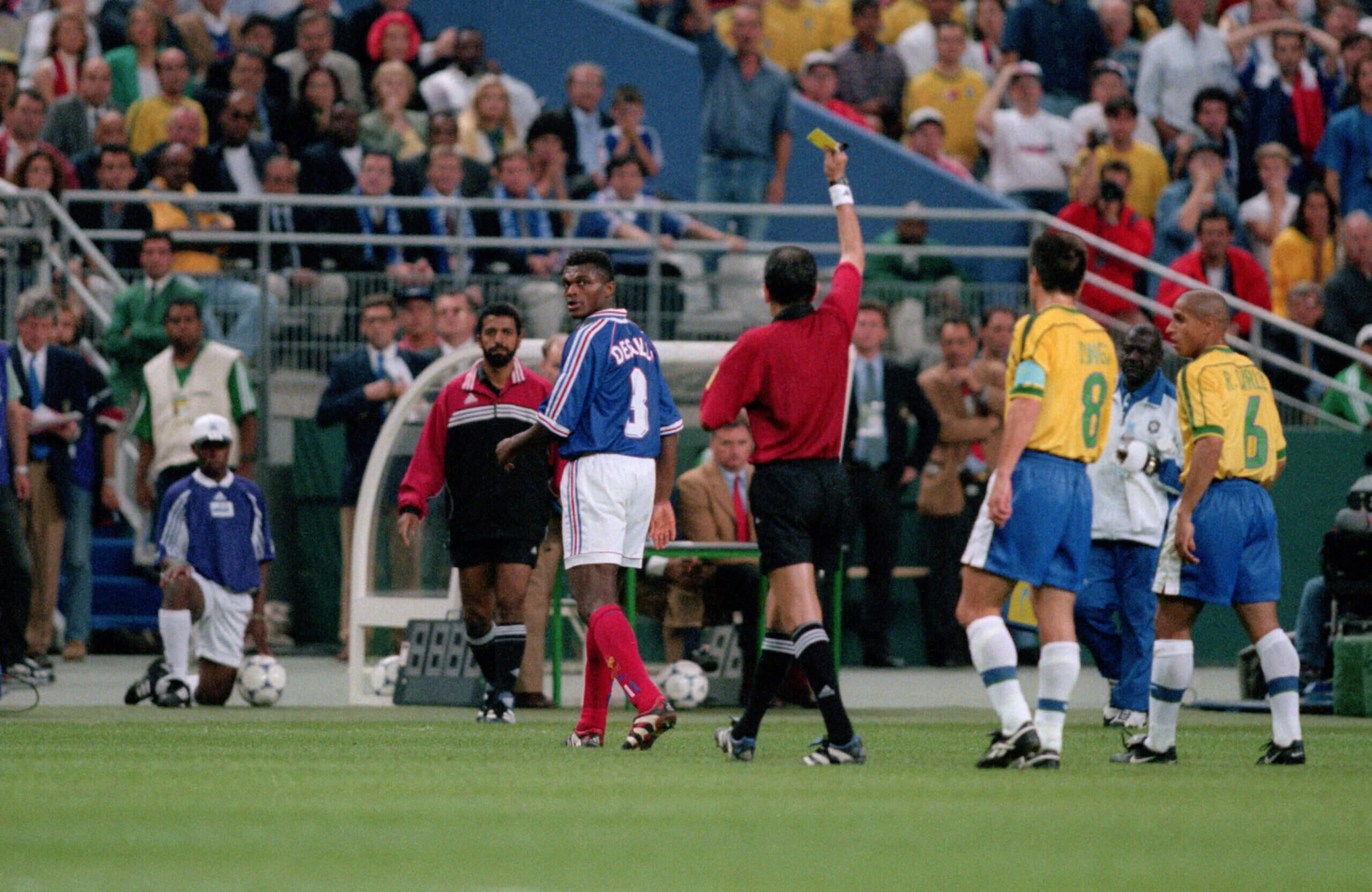
On July 1st, in a World Cup round of 32 match against Bosnia and Herzegovina, U.S. striker Folarin Balogun was sent off with a straight red card for serious foul play. The call was confirmed on a VAR review, which is about as reviewed as a call gets in soccer.
Before we go further, FIFA’s VAR is, to be kind, a joke. Not technology-wise, it is very much state-of-the-art. Common-sense-wise, organizationally, it is a disaster. There’s another international sport out there that also has continuous play with no time outs, called rugby. International rugby does not have this problem, its TMO process is integrated seamlessly into the match. FIFA’s VAR looks like somebody hit pause on the game to argue with a frozen screenshot.
FIFA’s system stinks and it got the Balogun decision wrong. It was definitely a yellow card, not a red.
But a red was given. End of story. What happens after a red card has never been in question. It “automatically incurs suspension from the subsequent match.” There’s no appeal, no review board, no do-over. There has never been a mechanism to review a red card while the tournament is still going on. Since 1966, World Cup red cards have been given, accepted, and bitched about… but never reviewed, and never rescinded.
Balogun played against Belgium five days later.
FIFA technically didn’t rescind the red card, instead it announced that the card was not overturned, the one-match suspension was upheld, but Balogun would be placed on probation for a year. Another ‘red’ during that time would lead to a one-game suspension.
This is not only not a thing, it’s ridiculous on its face. The entire point of the automatic suspension is immediate punishment for being sent off the pitch. Period.
There are tens of thousands of soccer players in the US playing at different levels of amateur state play, in competitive leagues across all age-groups, who hand their US Soccer IDs to the ref every Sunday morning in order to take the pitch. They get their IDs back after the game, unless they get a red card. Then the ref keeps it, the player gets it back in two weeks after sitting out the next match. This is how it works in front of 80,000 people in SoFi Stadium and on the pitch in back of the middle school in front of ten family members who spend most of the game walking the dog.
It’s the continuity that makes soccer what it is globally, that makes its fans so knowledgeable and dedicated.
The last time a World Cup send-off didn’t cost a player the next match was 1962, when Brazil’s Garrincha was sent off and played in the final anyway, and even that isn’t really precedent, because the card system didn’t exist then (also, the tourney was in Chile and there’s a better than even chance Brazil threatened to invade if he didn’t play).
There was no rule to bend. This time there was a rule. Belgium’s federation objected, pointing at the exact provisions; FIFA rejected the challenge on standing, as Belgium wasn’t a party to the proceedings, so they had no right to question the decision. Belgium then went on to win 4-1 with Balogun on the field. Sixty-four years of precedent, spent on a 4-1 loss with FIFA’s already fragile credibility taking the loss with it.
If you own a business, sit on a board, or hold a stake in a closely held company, you’ve seen this movie. Every company has its own version of that rule, whether bylaws, an operating agreement, or a shareholder agreement, documents full of words like ‘shall’ and ‘automatically’ that are supposed to settle things before anyone needs them settled. That’s the whole point of them. They’re the ID you hand the ref.
Then the moment arrives: a key executive wants terms the documents don’t allow, an employee everyone is terrified of losing needs an exception, a merger can’t wait for the required notice period. Someone decides the rules can move, just this once, to accommodate it. It’s always just this once. It never is.
Notice what FIFA didn’t do. It didn’t amend the rule, and it didn’t announce a review process anyone could point to next time. Either one would have been legitimate, because organizations change their rules all the time. Instead it kept the rule on the books, carved one player out of it, and explained that technically nothing had changed.
Technically, nothing had. Practically, ask any team at this World Cup what a red card means now and the answer is: ‘we don’t know.’.
The reason a red card means the same at SoFi as it does behind the middle school is that it means the same thing every time. Your company’s documents work exactly the same way. They’re only worth anything because everyone subject to them believes they’ll be applied the same way every time, especially when it’s inconvenient. Waive them ad hoc for the right person, once, and every partner, shareholder, and employee learns the same lesson Belgium did. Once you do it, nothing will be trusted again.

Don’t Miss an Issue
Haven’t subscribed yet? Agree with Homer? Then don’t miss another issue, subscribe now. And . . . if you know someone who may enjoy this, please feel free to forward this issue to them.