“Can’t Find My Way Home”
A Parable
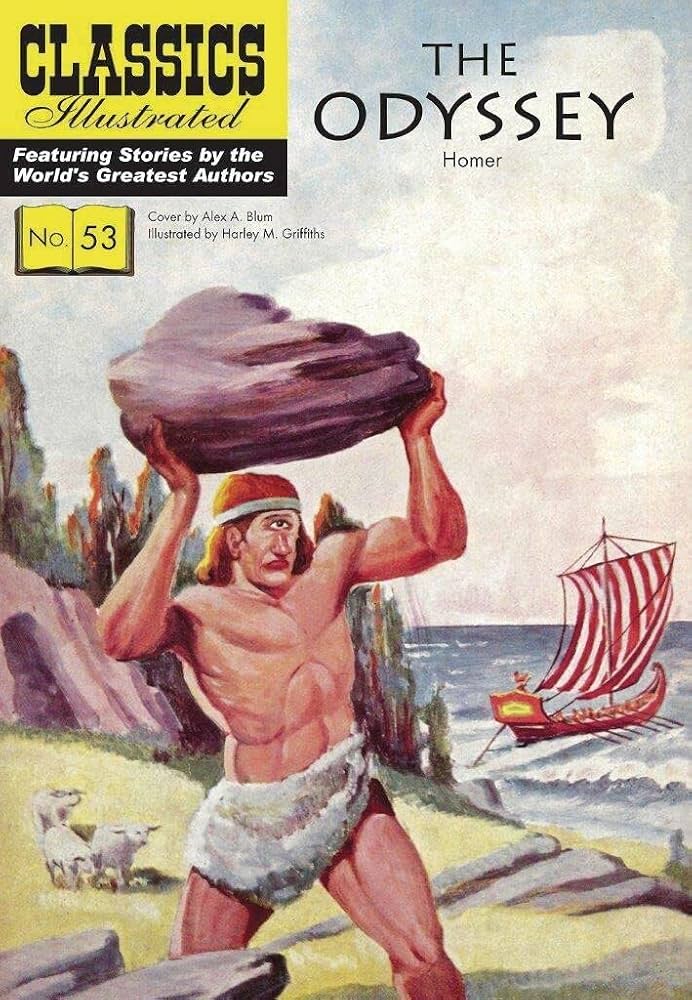
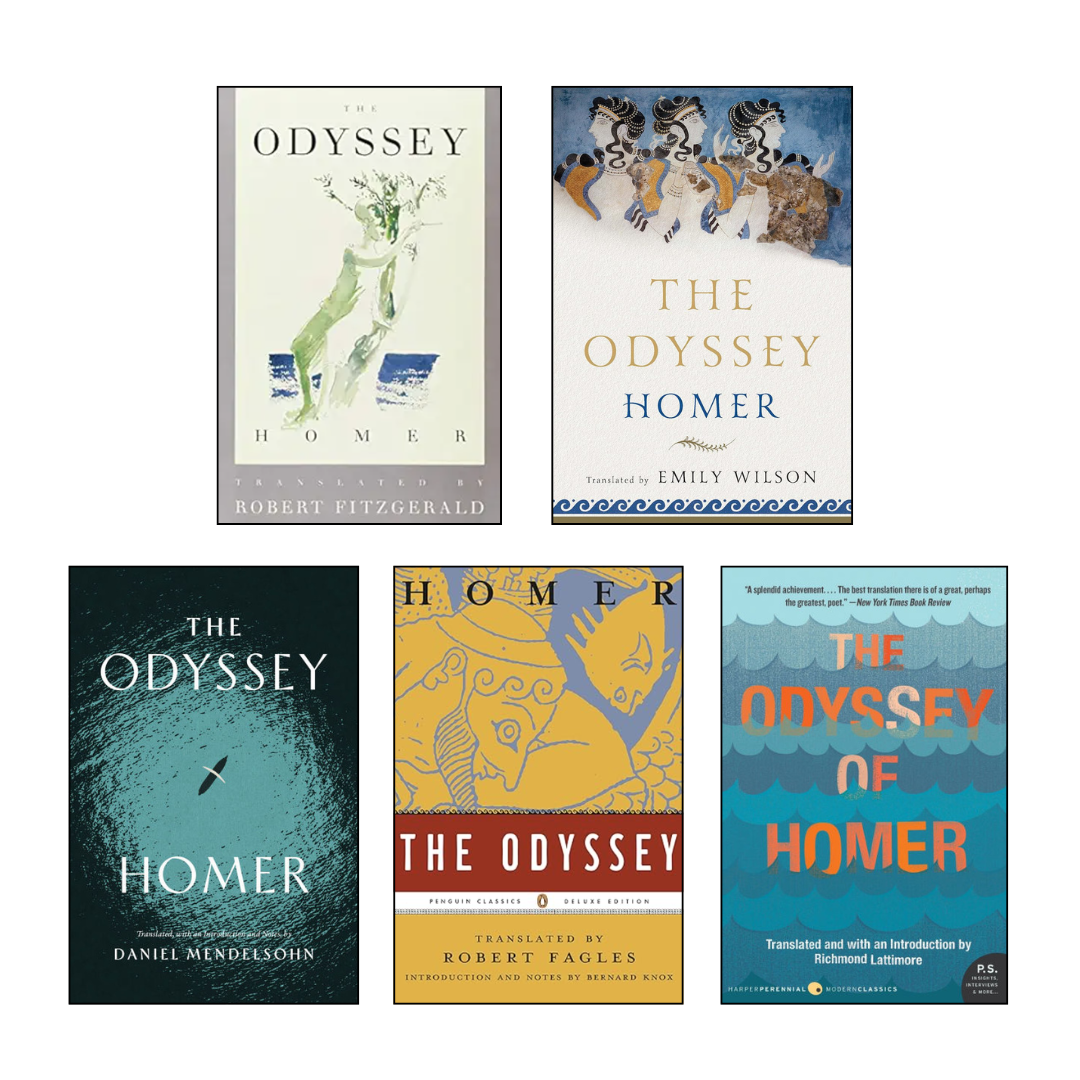
You’ve read The Odyssey (or pretended to in high school). Not the Classics Illustrated version (awesome as it is), not the plot summary, not the bit in high school where you got to the Cyclops and the sirens but the term ended. Say you’ve read it several times, in several hands, whether it was Alexander Pope’s rhyming couplets from the 1720s, Fitzgerald, Fagles, Emily Wilson, or Daniel Mendelsohn’s from last year. In other words, you like the thing, it means something to you.
Now there’s a Christopher Nolan $250 million movie version of it that is ruling the box office (or was until, confusingly, Telemachus turned into Spiderman and got his own movie?). For once there is consensus across social media: if you’re going to see it, see it in IMAX. Those seventy-millimeter prints are, however, in such demand that people show up outside theaters at 2:00 am while trying to book it online means scheduling it three weeks out (and those on-line service fees). Oh, and it’s about $25 before snacks. For one person.
Completely rationally, you’d like to know whether it’s worth it in terms time and money (for us lawyers, that’s three hours we could be billing someone). Not whether it’s good, whether you, specifically, having spent twenty years with this poem, are going to sit down in that room and be glad you did. The alternative is a ton of frustration and needing to reread it yet again (wait a bit and Wilson’s new translation will be out) to recapture your feelings about it.
You hit the internet first and quickly learn that it is angry about Helen. Lupita Nyong’o has the part. Elon Musk says Nolan lost his integrity (don’t think too hard about this); Matt Walsh reports rather too confidently reports that no one on earth thinks Nyong’o is the most beautiful woman alive. There’re more than 500,000 dislikes on the trailer. Quick aside: what, exactly, should the (fictional) child of a god disguised as a swan and the queen of Sparta, whose twin brothers are, oddly enough from a genetics perspective, constellations, and is hatched from an egg look like?
Go to Google which, of course, scrapes the net looking for first person ‘expertise.’ In no time it’s relaying as fact a Reddit thread with a million-odd upvotes about some guy’s cousin, an expert in ancient Greece and Greek via means never disclosed, who got up and walked out during the Circe sequence. Nine hundred people have replied to this. Underneath it, in no order more offshoots about the movie: the Greeks weren’t Greeks, the armor’s wrong, Agamemnon’s helmet is anachronistic, the costumes look like Batman villains, dogs don’t live twenty years, the aspect ratio changes four times (which is either great or a crime depending on the poster).
An AI is the next stop probably starting with some cut and paste from the Google search. Bingo, you get the real ‘experts.’ They, however, have a war going on: Emily Wilson, Daniel Mendelsohn, Caroline Alexander, and the historian Tom Holland—not the one playing Telemachus, though at this point that’s the sort of thing you have to specify—have been going at each other over Homer for years. Whose meter. Whose diction. Who is Odysseus. The movie just handed all of them a fresh field and the fight predates Nolan by decades and will outlive him.
Wilson pops to the top. She has the highest profile, including relative fame, great tats, a MacArthur, first woman to translate The Odyssey, a million copies sold, and now four thousand words in the London Review of Books that was so popular it crashed their website the day it ran.
You can’t help but notice that Wilson’s doctorate is in classics. She has spent her life in ancient Greek. She has never reviewed a movie. Asking, then, Emily Wilson whether to see this picture is like asking Neil DeGrasse Tyson if Project Hail Mary is worth it. You’ll get an answer based on how accurate he thinks the science is . . . but the acting, plot, dialogue, music, cinematography – not so much. (For the record, DeGrasse loved PHM because, you guessed it, science!)
Next are the humans you know, perhaps you’re at a family barbeque, the perfect place to talk movies.
The brother-in-law has seen it twice, both times in IMAX, the second time in a different IMAX to compare. He is so far up Chris Nolan’s prōktós he makes you feel like the protagonist in Memento ten minutes after he opens his mouth. “Seventy-millimeter negative. Practical effects, no green screen, they built the horse. What Nolan is doing with time.” He gets to Interstellar somehow. Everything he says is true and none of it is about Homer, whom he has met exactly once, in SparkNotes version he read in high school.
Your aunt liked the costumes. Somebody’s kid says the ending is a Nolan ending, which he means as either a compliment or warning depending on far too many variables to track. You have a cousin who reads a lot tells you she heard it’s very faithful, and when you ask to what, she says the book.
Three hours in the car home and you have four opinions, an argument about Zendaya, and a strong recommendation from a man who owns nine copies of Inception on every format known.
Two ways this goes. You skip a movie you might have loved because a woman who has given her life to this poem doesn’t do movies. Or you buy the ticket, sit down for three hours, and spend all of them furious, because the guy who talked you into it couldn’t tell Pope from Fagles at gunpoint while ‘pretty sure’ O’Brother Where Art Thou and The Simpson’s nailed it.
Now make it a legal problem instead of a movie. Doesn’t matter what kind… it’s yours, it has your facts in it, and it has never once happened to anybody in exactly this arrangement. Same three stops. The internet is angry about something adjacent. The AI hands you an eminent authority from a field not quite on point but seemingly close. The barbecue guy (okay, it’s a brother-in-law because it’s almost always a brother-in-law) went through something like it in 2011 and has been waiting years to tell somebody about it.
The only thing that’s different between the IMAX decision and the search for legal advice is that there is no possible way the legal search pays off. None. In the meantime you have described your issues to a Google search, AI (probably more than one), and a brother-in-law who’s now pissed at you because you wouldn’t let him sketch out the Interstellar cube on a napkin. All of these are discoverable – i.e., can potentially be used as evidence against you.
Legal question? Go to the lawyers who first.
By the way, searching what Christopher Nolan thinks would not have been remotely helpful. For one thing, he’s not only off social media: he doesn’t even have a smart phone. Also, there’s this: he told Stephen Colbert he made the film because the Odyssey is the ultimate dog story. He got a chocolate lab after his kids left for college, read the passage where Argos, after waiting twenty years for Odysseus and dies, sees him and dies and decides to make the movie. The working title was “Charlie’s Tale.”
Quick Update
Moose v. Beaver (and now a squirrel)
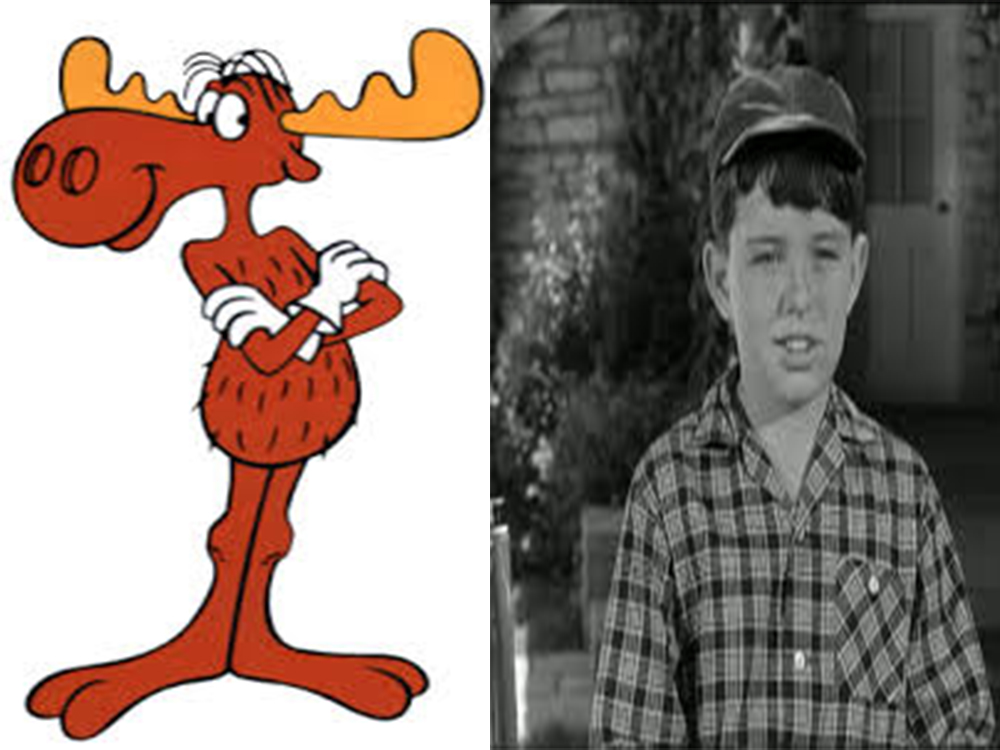
In March we covered Buc-ee’s, the Texas travel center chain that has spent years suing small businesses over cartoon animals. A duck in Missouri. An alligator in Texas. A dog-themed coffee shop that closed rather than fight. A koala. A squirrel on a package of underwear. And, most recently, a moose belonging to a forty-two-store Ohio convenience chain, hence our title and image back in March.
Buc-ee’s wins nearly all of them usually because it can, obviously, outspend the other side. Every one of those defendants had to weigh the cost of being right against the cost of proving it. Most do the math and stop. That is their enforcement model. It works precisely because it is rarely tested by someone who can match Buc-ee’s resources.
On July 26th, John Oliver tested it.
For the uninitiated: Oliver hosts Last Week Tonight, on HBO, they do thirteen-minute segments about subjects nobody else bothers with. He walked through the whole litigation history and quoted a trademark lawyer predicting that Buc-ee’s would eventually meet someone with the money and the appetite to fight. “Which is where we come in,” Oliver announced to a delighted audience.
Oliver brought back Mr. Nutterbutter, a seven-foot squirrel mascot the show introduced in 2017 while involved in a defamation suit he show subsequently won (long story, check it out online while noting that the show has never lost a legal matter).
Nutterbutter came back wearing a baseball cap with a new logo: ‘Buc-Off’. It’s built from a checklist of every element Buc-ee’s has ever objected to in someone else’s mark. Smiling animal facing right. Red tongue. Black circle. Yellow background. A hat included ‘arbitrarily’ – Buc-ee’s word which can only make one wonder what an unarbitrary hat is. Then they put it on tumblers, shirts, onesies, mugs, socks, and underwear, launched a website and is selling them with all profits going to Hunger Free America. (Buc-off.com if you’re interested, we have a coffee mug coming).
Oliver’s lawyers put Buc-ee’s in a box. Sue, and spend seven figures attacking a charity drive in front of a jury. Win, and own that result forever – as in, yay, we beat a parody show. Lose, and hand every duck, moose, and alligator in America a published opinion mapping exactly where the beaver ends and your rodent/reptile/amphibian begins. (In our piece in March we suggested drawing the line at capybaras). Do nothing, and maybe selective enforcement becomes the first exhibit in the next defendant’s brief.
If this were chess, Buc-ee’s would try to bluff its way to a draw. Oliver would decline to shake hands.
The merchandise went live ten days ago. There was a second show that aired Sunday, Buc-ee’s has filed nothing, said nothing, and sent no letters.
Don’t Miss an Issue
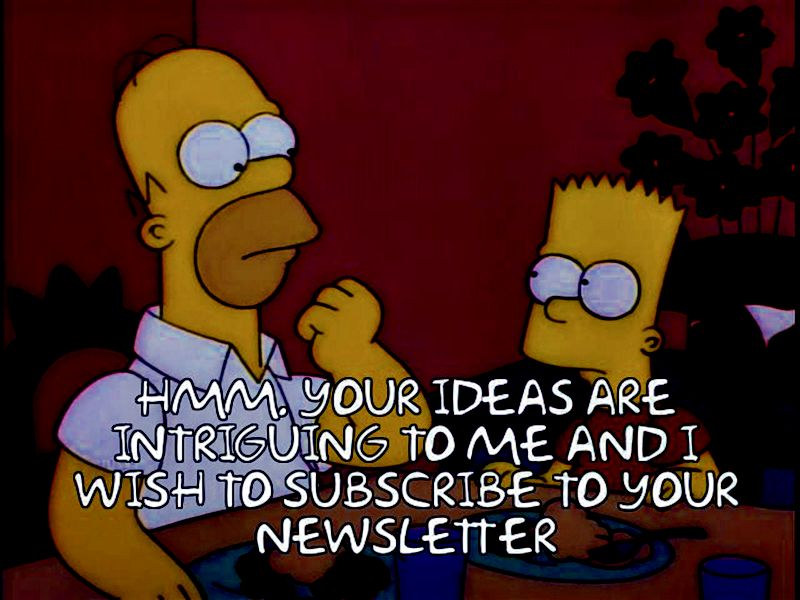
Haven’t subscribed yet? Agree with Homer? Then don’t miss another issue, subscribe now. And . . . if you know someone who may enjoy this, please feel free to forward this issue to them.