
It’s a Bird! It’s a Plane! It’s . . .
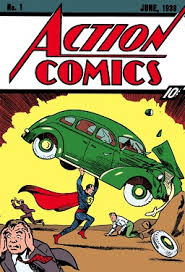
. . . Our Superman Special Edition
In the weeks leading up to the long-anticipated release of Superman, The Movie, in 1978 (“You’ll believe a man can fly!”) newspapers and magazines around the country received the following letter:
“I, Jerry Siegel, the co-originator of Superman, put a curse on the Superman movie! I hope it super-bombs. I hope loyal Superman fans stay away from it in droves. I hope the whole world, becoming aware of the stench that surrounds Superman, will avoid the movie like a plague.”
This was not a prank. It was not satire. It was a public, desperate appeal from a 61-year-old man who—along with his childhood friend, Joe Shuster—had created one of the most iconic fictional characters in American history and spent four decades watching others profit from it.
In 1938, Siegel and Shuster sold the rights to Superman to Detective Comics, Inc. (which would later become DC Comics), for $130 (not a typo). In exchange, they gave up all claims to the original 13-page story they submitted and the character himself, forever, and the chance to work for Detective Comics as writer and illustrator – no term of employment was specified.
This was a contract so bad that any minimally competent lawyer would have flagged it as disastrously one-sided one clause into review. This happened in midtown Manhattan during the Depression, lawyers were as common as coffee carts and desperate for clients. All Siegel and Shuster had to do was walk a few blocks and spend a few dollars for legal advice. Or barter, maybe offer a percentage. But they were young, broke, and just wanted to break into the comics and get syndicated. The money, $2,963.86 in 2025 dollars, seemed like a windfall.
What followed was exactly what any decent lawyer would have predicted. Superman exploded. Comic books, syndicated strips, radio, merchandise, cartoons. By 1940, he was everywhere. By 1941, Time magazine had featured him. Meanwhile, Siegel and Shuster were salaried freelancers. No royalties. No ownership. No control. Then DC Comics started to phase them out.
They sued in the late 1940s—and lost, initially. They settled in 1948 for a lump-sum payment of $94,000 ($1,253,846.89 in 2025 dollars) and a waiver confirming that DC owned everything. Then they faded. Siegel worked as a clerk. Shuster ended up drawing fetish comics as he slowly went legally blind.
Superman, of course, just got bigger, exploding with the popularity of television.
When Superman: The Movie was being promoted, neither man was involved. Their names had been scrubbed from the character for years.
Siegel’s letter in 1978 was angry. But it was also accurate. The stench he referred to was not about the movie itself—it was about what had been done to him and Shuster in plain sight.
By contrast, Batman—created around the same time—offers a different story. Bob Kane, Batman’s credited creator, had something Siegel and Shuster didn’t: legal representation. Kane negotiated a deal that preserved his credit and some control, even though Bill Finger, who co-developed much of Batman’s mythology, went uncredited for decades. The difference? Kane had a lawyer. And some leverage.
What happened to Siegel and Shuster was not a cautionary tale. It was an avoidable disaster. The kind of thing that makes lawyers shake their heads—not because it was unusual, but because it was predictable.
Hollywoodland
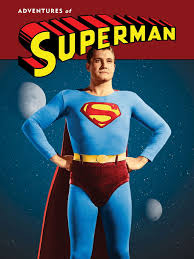
George Reeves never planned to be Superman. He had a small role in Gone with the Wind, bounced around in B-movies, and served in the Army during World War II. By the time he was cast in Superman and the Mole Men in 1951—a test run for what would become the television series Adventures of Superman—he was a working actor with steady pay but limited prospects, though he most certainly thought of himself as a star in search of the right role.
Superman wasn’t that role, Reeves didn’t even see TV as entirely legitimate, but a part was a part and he donned the suit. It never came off.
Reeves signed a multi-year contract to star in Adventures of Superman. The money was not great to start, $250 an episode but it did get better eventually topping $2,500 per episode. His contract, however, was terrible: he couldn’t take on any other acting work without studio approval. He had no rights over merchandising, reruns, or use of his image. He became a household name, instantly recognizable across the country, but his career options shrank even as his fame exploded.
Reeves tried to branch out. He directed some of the Superman episodes. He did stage work between filming seasons. He even tried to start his own production company. But the shadow of Superman was too big. Hollywood saw the costume, not the actor.
Reeves had a supporting role in From Here to Eternity came out in 1953, too minor to do much for his career. (The story that his scenes were cut down after preview audiences started shouting “Superman!” every time he appeared is a debunked urban legend) unless of course, he quit Superman.
Reeves had money, owned a house in Benedict Canyon, hosted parties, and drove a nice car. But he was stuck, trapped in a role he couldn’t shake, bound by a contract he couldn’t outgrow. The very thing that made him famous had also walled him in.
He died in 1959, shot in his bedroom. Officially, it was ruled a suicide. Unofficially, people have been arguing about it ever since. There were no fingerprints on the gun. No powder burns. Multiple bullet holes. Witnesses with conflicting stories. His mother didn’t believe it. Fans didn’t either. But the studios moved on without pause.
Today, it’s called the Superman Curse. A convenient label for the real problem: a combination of bad contracts, limited leverage, and a system that didn’t care what happened to you once the cameras stopped rolling.
Reeves’s deal was boilerplate for the 1950s. Actors were employees. Creative control didn’t exist. No final cut, no residuals, no protection against typecasting. Just a job. You took it or someone else would. Except for those who didn’t. Many directors and actors in the 1950s didn’t just accept boilerplate contracts. They negotiated, used leverage, took risks.
Reeves did not. It’s a sad story. George Reeves never had control over his career or his story – nor his name, image, or likeness. When Hollywoodland—a 2006 film dramatizing the final days of his life—was released, his estate had no legal right to block it or share in its profits. That authority belonged to Warner Bros. and the studios that own the character he portrayed.
Indeed, Hollywoodland’s producers were forced to shoot a new version of the opening credits of Adventures of Superman from 1952 when Warner Brothers refused permission for the actual opening credits to be used.
What Paramount Didn’t Want You to See (in 2006)
Superman, the Movies
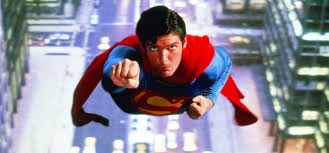
When Superman: The Movie hit theaters in December 1978, it was an immediate box office hit—making over $130 million domestically on a budget just over $50 million. It became one of the highest-grossing films of the decade. Audiences loved it. Critics praised it. Studio execs were ecstatic.
Richard Donner, the director fresh off the box office success The Omen, had decided to film the already planned sequel along with Superman, the Movie. Most of it was already shot when he halted filming to finish final production on the first picture sure that he had the contractual right to go back and finish what he started.
Instead, he was fired.
Sure, he had been hired to direct both films and, yes, had already shot approximately 75% of Superman II but unbeknown to him the producers were under no legal obligation to bring him back to finish the film.
In March 1979, Donner was officially out, with the producers citing creative differences, budget overruns, and tension over Marlon Brando’s fee as reasons. The real reason: Donner had been pushing for more control over the tone, the casting, and the messaging. He believed the film should be serious, not camp. The cast loved him for it, to the producers, it made him expendable.
The brough in Richard Lester to finish the film. For you non-cinephiles out there this is the equivalent of pulling Patrick Mahomes for Mason Rudolph in a tie game because Mahomes is calling his own plays.
Lester, for his part, immediately reshot just enough of Superman II to claim directorial credit under the Directors Guide of America (DGA) rules. Brando’s scenes were cut to avoid paying him. The final product was still a success, but Donner’s version vanished—as did Donner’s name in the credits.
Nearly thirty years later, in 2006, thanks to fan pressure and surviving footage, Warner Bros. finally released Superman II: The Richard Donner Cut. A win for creative integrity three decades late.
Donner’s contract wasn’t airtight. It didn’t guarantee final cut. It didn’t protect against being replaced mid-project. It didn’t give him control over his own footage. His entire vision, his work, his name—were up for grabs the moment the producers changed their minds.
It should have, Donner was coming off an enormous hit (The Omen) he had leverage – whoever negotiated his contract flitted it away.
That wouldn’t happen today. At least not to a director who delivers a hit like Superman. Christopher Nolan has final cut. So do Denis Villeneuve, Ari Aster, Tarantino, and Scorsese, et. al. Most A-list directors negotiate sequel rights, creative consultation clauses, and approval over edits. Donner had none of that. And even though he made a film that defined the modern superhero genre, he couldn’t protect it.
He did everything right on set. But the real battle wasn’t there. It was in the paperwork.
There was, of course, a Superman III, directed in full this time by Robert Lester. A so-so movie probably best remembered today as the major plot device in Office Space. But, it did just fine at the box office, so Supe (as Richard Pryor called him) IV was a dead certainty.
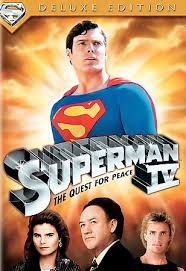
By the time Superman IV: The Quest for Peace hit theaters in 1987, everything had changed. The studio was different, the budget was slashed, and the story . . . well, the story was about to become its own legal problem.
Christopher Reeve had initially resisted returning for a fourth film. He wasn’t interested in a paycheck without substance. But Cannon Films, desperate for a bankable star and eager to legitimize the franchise, made him an offer that shifted the balance.
Reeve negotiated significant concessions. He secured story input and co-writing credit. He pushed the central theme of nuclear disarmament. He had veto power over certain casting decisions and approval rights over character arcs. He also got Cannon to finance his long-stalled passion project, Street Smart, a gritty drama that would earn Morgan Freeman his first Oscar nomination.
What Reeve didn’t plan for was the shaky finances of Cannon who, it turned out a few years later, had been lying on their financial statements for years until finally nailed by the SEC.
Originally set at $36 million, the production budget was cut to around $17 million before filming even began. Scenes were dropped. Effects were downgraded. Sets were recycled. And the vision Reeve had worked so hard to shape, idealistic, global, politically engaged, was gutted in editing. Nearly 45 minutes of footage were cut.
Even that version was enough to trigger a lawsuit. In 1988, five screenwriters filed suit in U.S. District Court, claiming that Cannon Films had stolen their story. The group said they had pitched a Superman script to Cannon executives in 1985 that included many of the same elements: Superman confronting global arms dealers, struggling with moral consequences, and clashing with a cloned supervillain.
They claimed Cannon had lifted their concept without credit or compensation.
The case, Bruns et al. v. Cannon Group, never reached a definitive ruling. Cannon denied wrongdoing and claimed the similarities were coincidental or based on existing Superman canon. But the lawsuit served as a reminder that idea theft in Hollywood is both common and hard to prove.
The big legal problem: ideas aren’t protectable. Only the specific expression of an idea is. So unless the stolen material is nearly identical in dialogue, structure, or sequence, lawsuits rarely succeed. That’s why the Superman IV lawsuit was largely forgotten. It fizzled out alongside the film’s box office.
Trademark Termination
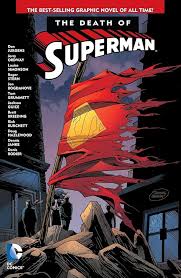
After the debacle of Superman IV and the collapse of the studio, the Superman franchise was in bad shape – worse, it was irrelevant. Tim Burton, Michael Keaton, and Jack Nicholson’s 1989 Batman left Superman in its dust.
Ironically, it took Superman, the comic book, to bring Superman back. In 1991, DC Comics announced the impending death of Superman in a “Story that Will Shook the World:” The story arc, divided into three parts (“Doomsday!”, “Funeral for a Friend,” and “Reign of the Supermen!”) saw Superman die in a brutal battle with Doomsday, a monstrous villain created specifically to kill him. The fight culminated in Superman #75, which became the best-selling comic of 1992, selling over six million copies. The success continued well into 1993 as Superman, unsurprisingly, came back (sorta).
Good timing for the Siegel estate as 1997 marked the first year they could file for termination under the 1976 Copyright Act, which allows creators or their heirs to reclaim copyrights after a fixed number of years, even if those rights were long ago signed away.
The U.S. Copyright Office granted the termination for specific works, including the original 1938 Superman story in Action Comics No. 1. That sparked a long legal battle with DC Comics—a mix of partial victories, appeals, and strategic delays—until the parties reached a confidential settlement. 2001, more than 60 years after Jerry Siegel and Joe Shuster sold Superman to DC Comics for $130.
Under the terms of that deal, the Siegel family reportedly received $3 million upfront, $500,000 annually, and a percentage of gross revenues from new Superman productions. They also secured health benefits and permanent screen credit. Not anywhere near full ownership but a reversal of fortune for a family that had spent decades scraping by while Superman became one of the most profitable fictional characters in the world. The Shuster estate got considerable less, reportedly around $25,000 a year.
It seems like a lot, finally, but let’s put it in perspective: between 1938 and 2001 Superman though all its revenue streams – comics, movies, TV, toys, graphic novels, and more – earned an estimated $6.9 billion.
At the time of the settlement, Superman was about to return to the big screen. Superman Returns, released in 2006 and directed by Bryan Singer, was the first theatrical Superman film in nearly two decades. It was a soft reboot—a film that deliberately ignored the third and fourth installments of the Reeve era and tried to recapture the tone of the Donner films.
The Siegel settlement didn’t change what Superman had become. But it changed the narrative about what had been done to its creators. From that point forward, the Siegel family had a stake—however small—in the character’s future.
One Last Shot
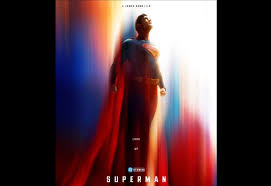
Superman met the “Dickens Clause” earlier this year. The “Dickens Clause” is a complex statutory framework of reversionary copyright in the United Kingdom, Ireland, and the EU. It was created in the UK specifically to provide financial relief to the impoverished families of deceased authors.
Earlier this year, the estate of Joe Shuster filed a lawsuit in federal court in New York. It argues that, under U.K. and comparable foreign copyright laws, Superman rights reverted back to Shuster in 2017 – 25 years after his death. Since then, they say Warner Bros. and DC Comics have continued exploiting the character—films, shows, games, merchandise – in places like the U.K., Ireland, Canada, Australia, India, and Israel without permission or compensation
With the new Superman movie scheduled for worldwide release in July, Warner Bros. responded quickly. In April, a federal judge dismissed the suit, finding U.S. courts lacked jurisdiction over foreign copyright claims. Undeterred, Shuster’s estate refiled in New York state court, this time requesting an injunction to block the July release in Europe and Commonwealth markets.
That state-level bid was shot down in June though not because the claims lacked merit, but because the court found no evidence of irreparable harm or actual direct harm to the estate from the film’s overseas debut.
Reversion rights in foreign law: In many U.K. jurisdictions, authors’ works revert automatically to estates 25 years after death—without requiring action. That period passed for both Shuster (2017) and Siegel (2021)
Eighty-five years after the disastrous sale, Superman continues to battle in the courts. There’s sure to be more to come: the original version of Superman enters the public domain in 2034.
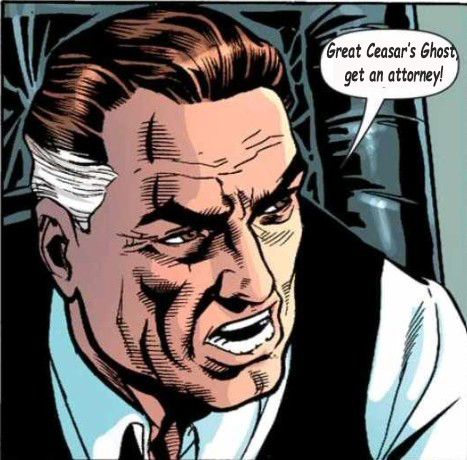
The Moral of the story(s), as explained by The Daily Planet’s Perry White:
Don’t Miss an Issue
Haven’t subscribed yet? Agree with Homer? Then don’t miss another issue, subscribe now. And . . . if you know someone who may enjoy this, please feel free to forward this issue to them.