
The Fourth Out
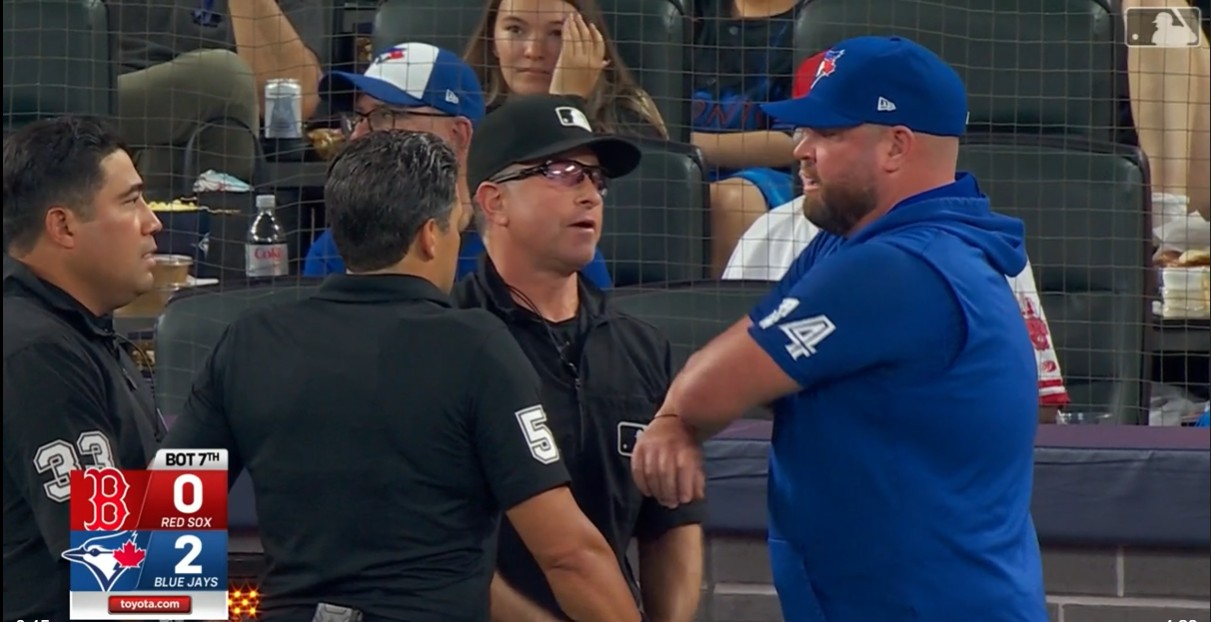
Earlier this month, Toronto was up 2-0 on Boston in the seventh inning. Boston had runners on the corners with one out—except the center-field scoreboard showed two. The batter hit a line drive to deep center—right under the scoreboard. Apparently both Red Sox runners, tracking the ball, saw the scoreboard and promptly forgot what the base coaches had been telling them—they took off. (Click on the image above to watch the mess).
As the runner on third, Anthony Seigler, crossed the plate. The Blue Jays’ pitcher and catcher pounded their gloves and headed toward the dugout, thinking the inning was over. It wasn’t. The scoreboard operator caught the mistake and rolled the count back from two outs to one before recording the caught fly as the second out, (You can see it in real time in the video).
Blue Jays second baseman Josh Smith knew there were now two outs and raced to double up the runner at first and get the third. He did so easily since the runner, Nick Sogard, was somewhere around third at the time. End of inning, finally – with a twist: Seigler’s run counted though no one aside one umpire and one Blue Jay siting far in the back of the dugout knew it at the time. It took the umpires and the New York City review crew over 15 minutes to figure it out.
It’s called a timing play (Rule 5.09(c)(4), page 50—not the clearest rule ever written, by the way). Seigler never tagged up, so had Toronto thrown to third, he’d have been out and the run wiped off. That didn’t happen but Seigler’s run still wasn’t automatic. Had a Blue jay remained on the field and appealed to third Seigler would have been ruled out (the fourth out!) and the run wouldn’t have counted.
One person in the Rogers Centre knew exactly what was happening – Max Scherzer, sure-fired Hall of Fame to be pitcher on his day off sitting in the dugout.
“Absolutely,” he said. “I have seen this before.”
Of course he had. Scherzer has been pitching roughly since the mound was lowered to its present height. A play that confused everyone else on the planet “a play that required treating an entirely imaginary out as a real thing” to quote an equally baffled The Athletic writer was just a rule he’d run into somewhere across two decades of showing up.
That’s the point, and it’s why we keep writing about obscure rules like this. Anybody can read the rulebook. Competent is easy to come by. But there’s a canyon between knowing the rules exist and being the one person on the field who recognizes the once-in-a-career situation while it’s unfolding. It doesn’t come from the book. It comes from having been there before.
When your legal issue hits a fourth-out moment, the weird one the one nobody in the room has seen, you don’t want nor need your lawyer to be the guy pounding his glove because he thinks the inning’s over. You want one who already knows the rule on page 50 and knows exactly what to do.
In other words, lawyers who know the rule and have the experience to instantly recognize the circumstances that give rise to it.
Another Quick Update
Beavertown
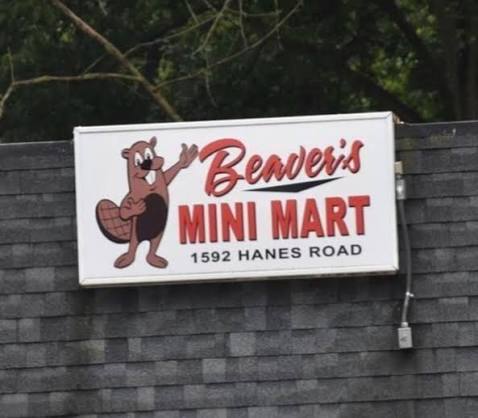
In March we covered Buc-ee’s, the Texas travel center chain that has spent years suing small businesses over cartoon animals. A duck in Missouri. An alligator in Texas. A dog-themed coffee shop that closed rather than fight. A koala. A squirrel on a package of underwear. And, most recently, a moose belonging to a forty-two-store Ohio convenience chain that led to our Moose v Beaver headline.
On July 26th, John Oliver and the Last Week Tonight team walked through Buc-ee’s litigation history and quoted a trademark lawyer predicting that Buc-ee’s would eventually meet someone with the money and the appetite to fight. Long story short (if you missed our last newsletter) Oliver launched ‘Buc-Off’ an online shop selling Mr. Nutterbutter’s (a seven foot tall squirrel) image on merch ranging from hats to tumblers, shirts, onesies, mugs, socks, and underwear—everything Buc-ee’s has launched lawsuits over. All proceeds go to charity.
So far Buc-ee’s voracious lawyers have left Oliver and company alone – but a week after the show, they did file another trademark infringement action. This one is against a small mini-market in Ohio called Beaver’s Mini Mart. This time it’s mostly about the Beaver not the hat, the way it’s looking, or the colors.
The blowback was instantaneous for Beaver’s Mini Mart is in Beavercreek, a town established in 1803. Seemingly overnight, virtually every business in Beavercreek not already sporting some kind of beaver logo and/or beaver-incorporated-name adopted the same – loudly with bold placement. The town council made the local high school’s long standing mascot—Bucky Beaver (of course)—the official Beavercreek, Ohio town mascot.
There is a lawyering lesson here: sometimes it’s the lawyers job to tell the client you might, very technically speaking, be right after a very long, contentious case but you can not only never win the optics, you’re never getting the good will back.
A PSA
A lot of people these days who travel out of the country take steps to hide/protect/obscure/delete apps and info on their smart phones before returning to the U.S. and the possibility, remote or not, of Customs asking them to unlock the phone.
It’s become a thing, a lot of attorneys, especially immigration attorneys, do it to protect privileged information.
So, take note of this: January of last year, Samuel Tunick flew home to Atlanta from a vacation in the Dominican Republic and was pulled aside for questioning at Hartsfield-Jackson. At some point the officers asked for his phone and passcode. He gave them one but it wasn’t the code that unlocked the phone. It was a second code he’d set up in advance, entering it started a full wipe of everything on the device. They took the phone anyway and let him into the country. Ten months later a grand jury indicted him.
The charge is obstruction—destroying evidence to keep the government from seizing it.
The setup he used is called a duress passcode, and, yes, it’s a real feature, not a Mission Impossible gadget. You configure a second code ahead of time. Type the normal one, the phone unlocks. Type the other one, the operating system erases the contents. Completely. Tunick was running GrapheneOS, a privacy-focused operating system, on a Google Pixel.
This charge is close to unheard of. According to a federal public defender on Tunick’s team, only one other indictment on it has been filed anywhere in the federal system in the last thirty years, a 2019 drug case.
The government’s theory: the phone was just the box, the data inside was property they had authority to seize, typing the code was a ‘physical act that destroyed it.’ Courts have treated digital data as property for a long time so wiping a drive gets analyzed about the same way as flushing something you don’t want CSI checking out down the toilet. A Columbia law professor and former federal prosecutor summarized the government’s contention in one line: he handed the code to people he knew were exercising lawful authority, knowing what it would do.
Tunick’s lawyers are fighting the seizure itself. They say he was detained unlawfully, never read his rights, and asked for a lawyer over and over and was refused. Customs takes the position it can search and seize a traveler’s device without a warrant because you aren’t technically in the country until they say you are. The Supreme Court has agreed that constitutional protection is thinner at the border.
This is interesting and will get even more interesting as it winds through the courts.
Right now, here’s how it affects you: if you clean out your phone at the hotel, before you ever leave for the airport, because you don’t like the idea of strangers scrolling your photos, you have a strong argument that you weren’t obstructing anything — there was no imminent search to thwart. Once you’ve been stopped and are being questioned, that argument is gone.
Plan ahead, don’t use the self-destruct code.

Don’t Miss an Issue
Haven’t subscribed yet? Agree with Homer? Then don’t miss another issue, subscribe now. And . . . if you know someone who may enjoy this, please feel free to forward this issue to them.