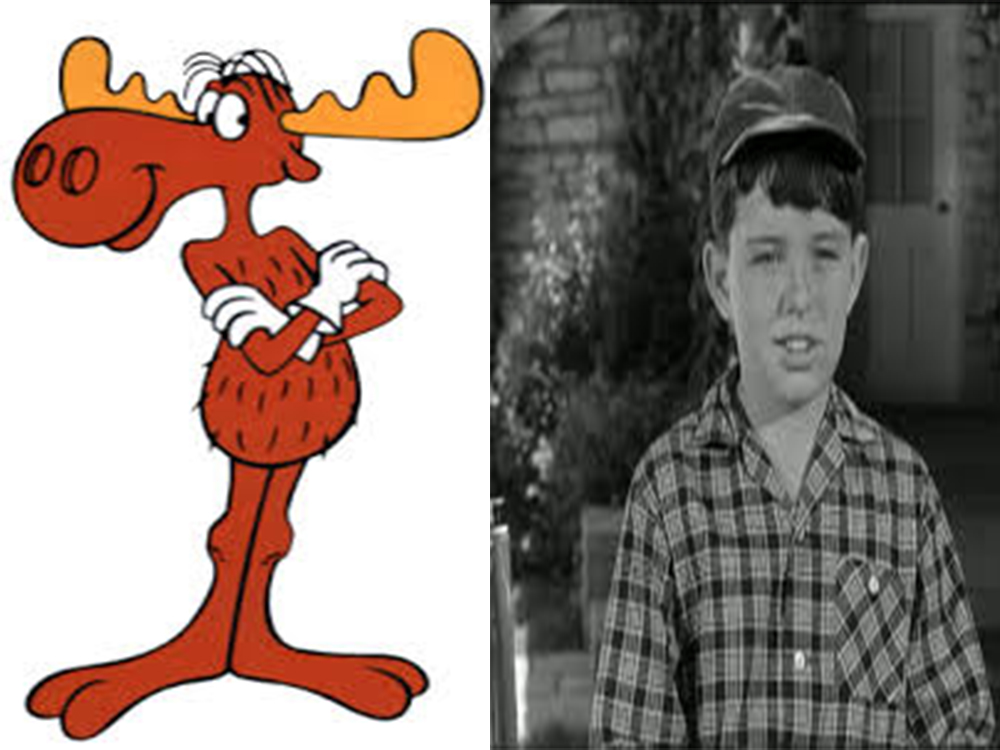
Moose v Beaver
If you have driven on an interstate highway in the American South in the last decade, you know Buc-ee’s. The Texas-based travel center chain is impossible to miss—sprawling, immaculate, staffed by dozens of employees, and anchored by what are undoubtedly the most aggressively branded restrooms in the history of American commerce. The mascot is a buck-toothed beaver wearing a red baseball cap in a yellow circle.
Buc-ee’s has defended that beaver (Bucky, of course) aggressively and seemingly without thought of the considerable legal costs, for years. They’ve sued a Missouri drive-through called Duckees (a cartoon duck in a yellow circle). They went after a Texas travel center called Choke Canyon over its alligator (no idea what its name was). They sued a Missouri dog-themed coffee shop called Barc-ee’s — which shut down shortly after the lawsuit was served. They have sued apparel brands in South Carolina, Arizona, and Florida for putting Bucky on t-shirts without permission. In August 2023, they went after a Mexican convenience store called Buk-II’s Super Mercado.
The latest defendant is Mickey’s, an Ohio-based chain of 42 convenience stores and gas stations operating in northern Ohio. Mickey’s mascot is a smiling cartoon moose (Mickey the Moose) inside a red hexagon. The moose has been part of the brand since 2020, though Mickey’s updated its logo in the summer of 2025 in connection with a rebranding from “Mickey Mart” to “Mickey’s.”
On February 18th, Buc-ee’s filed an Ohio federal court alleging trademark infringement and unfair competition. The argument: Mickey the Moose could be mistaken for Bucky.

Both mascots, Buc-ee’s contends, are cartoon animals facing right, with wide eyes and smiles, set against a round background. Both brands use red prominently. The name “Mickey’s,” the suit further argues, sounds like Buc-ee’s (well, they do rhyme).
Buc-ee’s wants cancellation of Mickey’s trademark registrations, a permanent injunction, destruction of all related branding materials, treble damages, and attorneys’ fees.
Just one complication: a moose and a beaver are not the same animal. The Techdirt legal blog, covering the lawsuit with barely contained disbelief, noted: “A beaver is not a moose—which is a sentence I never thought I’d have to type out on a keyboard.”
So why is Buc-ee’s filing?
The answer has less to do with Mickey and more to do with the logic of trademark enforcement. A registered trademark is only as strong as its holder’s willingness to defend it. Courts have long held that a company that fails to pursue infringement risks weakening—and potentially losing—its mark through ‘trademark abandonment.’ The legal principle is straightforward: if you don’t enforce it, you may eventually be deemed to have given it up.
We have covered this dynamic before, most recently with Lamar Jackson’s aggressive defense of his trademarked number 8 against Dale Earnhardt Jr., and with Monster Energy’s now-infamous campaign to own the word “monster” in every form it appears. The question in each case is the same: where does legitimate brand protection end and overreach begin?
The answer: the line is drawn by courts, not by the trademark holder. Buc-ee’s legal team will argue that the overall commercial impression—cartoon animal, round emblem, red branding, similar name pattern—creates consumer confusion. Mickey’s will argue, with some force, that no reasonable person standing at a gas pump in northern Ohio is going to mistake a six-foot cartoon moose for a two-foot cartoon beaver and assume they’ve wandered into a Buc-ee’s.
The timing is notable. Buc-ee’s is scheduled to open its first Ohio location on April 6th, in Huber Heights, about 90 miles south of Mickey’s home territory. The lawsuit was filed six weeks before that opening. Whether the proximity is coincidental is a question the court may or may not find interesting.
In the meantime, the case serves as a useful reminder about trademark registration and enforcement, both of which require attention well before a competitor shows up.
Mickey’s updated its logo in the summer of 2025 and reapplied for trademark registration. Buc-ee’s had already filed a cancellation petition with the USPTO in August of that same year, months before the federal lawsuit. By the time Mickey had his new look, Bucky’s lawyers were already in motion.
Whatever a court ultimately decides, the broader lesson is the same one we return to regularly: a trademark you don’t protect is a trademark you are slowly giving away.
In the meantime, maybe there can be some kind of Buc-ee’s trademark rule so that ridiculous comparisons are avoided. Maybe, anything larger than a capybara is safe?
Cut Us Some Slack
Anyone who has bought a concert ticket in the last two decades has had the same experience. You find a show, select your seats, proceed to checkout, and watch the price climb—service fees, facility fees, order processing fees, the occasional fee whose purpose defies explanation—until the $45 ticket you thought you were buying becomes a $78 transaction. Or worse, almost infinitely worse in some cases, the dreaded ‘Dynamic Pricing’ scheme that makes tickets to the new Springsteen and the E-Street Band tickets a choice between going or buying a new BMW.
Live Nation Entertainment owns Ticketmaster, controls more than 265 venues across North America, manages over 400 artists, and promotes the vast majority of major concerts in the United States. Despite years of complaints and boycotts, they have long claimed that their pricing merely reflects the market and their [infamous] fees are standard industry practice.
Millions of sports and music fans, along with the Justice Department, disagree. In May 2024, joined by attorneys general from 39 states and the District of Columbia, filed an antitrust lawsuit against Live Nation alleging that the company had illegally maintained a monopoly across the live entertainment industry by controlling the venues, the ticketing, the promotion, and the artist management simultaneously, and using that control to squeeze out competitors, lock in venues with exclusive contracts, and leave consumers with nowhere else to go.
The trial began in Manhattan on March 2nd.and went one week before Live Nation and the Justice Department reached a settlement. Twenty-six states rejected it and are continuing the case with the same jury.
Over the past two weeks, the court ordered the release of a set of internal Slack messages between two Live Nation employees — Ben Baker, head of ticketing for the company’s amphitheater division, and Jeff Weinhold, a senior ticketing director. They had been submitted as government exhibits over Live Nation’s objections that they were “irrelevant” private remarks between two friends. To quote, just “off-the-cuff banter, not policy, decision-making or facts of consequence.”
The comments, however, were part of a long Slack thread . . . on Live Nation’s Slack account. So, the world got to read exactly what the people setting prices though of concert and sports goers:
Baker: Discussing VIP pricing at a show in Tampa: “These people are so stupid.”
Weinhold: “I set VIP parking priced at $250.”
Baker: “I almost feel bad taking advantage of them.”
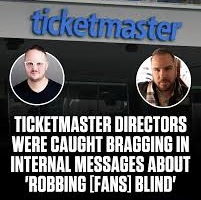
Baker: After reviewing a financial table showing the annual growth of premium parking revenue at one venue topping out at $666,000: “Robbing them blind baby. That’s how we do.”
Baker: “I gouge them on ancil[liary] prices to make up for it.”
Baker, it should be noted, is by any reasonable reading, a senior executive describing the company’s pricing strategy in plain English. Not, as the company tried to assert, a junior executive chatting with a friend. How that ‘friend’ got on the company’s Slack account was not explained.
This isn’t the first time Live Nation’s internal communications have been used against it. In a 2016 lawsuit, an email surfaced in which CEO Michael Rapino described a $14.75 fee on a $36 ticket as “not defensible.” Not a great thing to have read in an open courtroom.
The lesson that Live Nation appears to be incapable of learning is one of the oldest in litigation, certainly in the Information Age: there’s no such thing as a private work communication.
Slack feels like a conversation. It has the cadence of a text message, the informality of the long gone water cooler chat (ask your over 45 or so co-workers). People say things in Slack they would never put in an email, precisely because it feels less like a document and more like talking. This feeling is wrong.
Slack messages are stored, searchable, and in any company of meaningful size, subject to litigation hold and discovery the moment a lawsuit is filed or reasonably anticipated. “Private” in the Slack context means your colleagues cannot see it. It does not mean a plaintiff’s attorney and a federal judge cannot.
Stephen King Did Not Edit Your Cover Letter

Grammarly has been a fixture on the desktops of students, professionals, and anyone who feels the need to attack someone over the use [or nonuse] of the Oxford comma. It started as a spell-checker, became a grammar coach, and is has now positioned itself as an AI-powered writing assistant. Roughly thirty million people a day use it (but not us).
In August 2025, launched a new feature called Expert Review, available to subscribers for $12 a month. The premise was appealing: upload your writing and receive real-time feedback styled as if it were coming from a recognized expert in the relevant field, whether an acclaimed journalist, a celebrated author, a prominent academic. Users could select their expert. The software would analyze the document, apply what it knew about the expert’s work, style, and sensibilities, and deliver comments in their voice.
What users were not told was that none of the experts had agreed to any of it.
The roster of “experts” included investigative journalist Julia Angwin, novelist Stephen King, astrophysicist Neil deGrasse Tyson, New York Times reporter Kashmir Hill, and former Federal Trade Commission Commissioner Julie Brill, among hundreds of others. None of them were consulted. None of them consented.
On March 11, 2026, Angwin, a Pulitzer Prize-winning journalist, founder of the nonprofit newsroom The Markup, and contributing editor at the New York Times, filed a class action lawsuit in federal court in Manhattan against Grammarly’s parent company, Superhuman Platform. The suit alleges that Grammarly violated her right of publicity and the equivalent rights of every other expert whose name and identity were used to sell subscriptions without their consent.
She was “shocked and horrified” when she discovered the program and noted a practical concern: a user who followed “her” advice and received a bad grade or a negative performance review at work would have every reason to be angry with Julia Angwin, who had nothing whatsoever to do with the advice she supposedly gave.
The New York statute prohibiting the commercial use of a person’s name or likeness without their consent is over a hundred years old. Grammarly appears to have been well aware of the law given that they carefully deployed language like “applying ideas from” and “inspired by” rather than claiming direct endorsement in very tiny print.
Superhuman’s CEO, Shishir Mehrotra, pulled the Expert Review feature the same day the lawsuit was filed and then posted on LinkedIn that the feature had already been scheduled for removal before the suit landed and that it had seen “very little usage” in its short lifespan before also announcing that Grammarly will rebuild the feature with “significantly more benefit to both users and experts.” Presumably the experts will benefit by actually being asked for their permission.
AI made this possible of course. It doesn’t take a huge company like Grammarly to try to do this. Forget Stephen King’s two million and counting novels, in 2000 he published On Writing, widely considered one of the best books about the writing process published in the last thirty years. For AI, that’s a blueprint to impersonate him as a writing coach. Thankfully, AI and advanced online search tools make it relatively easy to uncover schemes like this.
Check It Out
Our partner, Jessica Sprague, was just featured in New Jersey Super Lawyers:
Managing Mayhem
How Jessica Ragno Sprague eased Passaic County’s family court crisis
Here’s a link: Managing Mayhem, it’s worth a read.

Don’t Miss an Issue
Haven’t subscribed yet? Agree with Homer? Then don’t miss another issue, subscribe now. And . . . if you know someone who may enjoy this, please feel free to forward this issue to them.