
Beer!
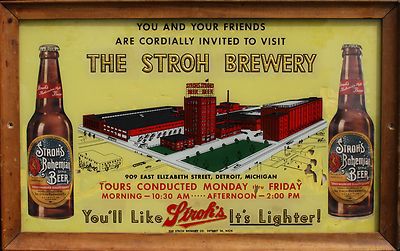
It’s Labor Day weekend and thoughts turn to the end of the summer and cookouts. And beer. Labor Day weekend accounts for a significant portion of the $100 billion U.S. annual beer sales.
There are thousands of beer choices in 2025. Craft beer breweries are everywhere. But when all is said and done, by this coming Tuesday, the best selling beers will be Anheuser-Busch and Coors brands. Two companies that began as family-owned businesses in the mid-1850s and eventually morphed into brewing conglomerates.
Anheuser-Busch and MolsonCoors are the two largest brewers in the United States. Hardly surprising, it’s been that way for generations of beer drinkers.
It wasn’t quite that way in the 1970s. Anheuser-Busch was number one but Coors – still not a national brand – was fourth. Between them was another family owned brewery started before the Civil War – Stroh’s. You may have never heard of Stroh’s but for 130 years it was a household – well, at least a beer-drinker-in-the-Midwest household – name.
Like Coors and Budweiser, Stroh’s was founded by an immigrant in the mid-1850s. Like them, Stroh’s started as a family business. Like them, the Stroh’s passed the business down for four generations.
Unlike them, the Stroh’s didn’t survive, adapt, and thrive into 21st Century. Neither did the Stroh’s fortune, at one time one of the largest family fortunes in the United States.
It’s not often that real life allows a direct comparison of companies over a century like a business school problem, but that’s the Coors, Anheuser-Busch, Stroh’s scenario. Each were family owned businesses that made it – while surviving Prohibition, no less – from the Civil War through to the Reagan years.
Then, in the space of ten years, there were two. As you can probably guess, there are more than one reasons for Stroh’s demise. Everyone one of them revolve around bad planning and irresponsible corporate decision making unchecked by shareholders.
Stroh’s made beer in Detroit. They marketed aggressively to the Mid-West. They, obviously, had a great, loyal following. They decided at the turn of the 19th Century that only the men of the family would run the business – no women, no outsiders. Every family member was a shareholder.
The Board was made up of Strohs. The CEO was always an immediate member of the family. Every family member was ‘guaranteed’ dividends for life regardless of their participation in the business. By 1980 Stroh’s dividends were paying for the lavish lifestyles of some twenty-seven family members, only a handful of whom active in the business.
Stroh’s had an entrenched market but made the mistake of becoming entrenched as a company.
After one hundred and twenty years of success doing it the ‘family way’ no thought had been given to planning ahead. Change came and it came fast. In Stroh’s case it came from their fellow-immigrant-founded-in-the-1800’s company, Coors.
Coors was spreading eastward. By the late ’80s their sales were poised to surpass Stroh’s. Stroh’s management wasn’t ready. The CEO wasn’t ready. They didn’t realize – until too late – that they had missed the light beer wave and were already behind the rest of the industry. The shareholders were as oblivious as they were happy with their dividend payments.
The CEO panicked. He tried a series of increasingly ill-advised, knee-jerk-like reactions to catchup with Coors. Instead of concentrating on keeping their loyal market intact against the Coors incursions, he decided to expand ‘just like Coors.’ He borrowed to buy other regional breweries – as far away as New York.
Nothing worked. The CEO borrowed lavishly again to fund new ventures – including moving into biotech – while still paying the family dividends. The only result – crushing debt.
In 1999, Stroh’s closed the brewery. A planned sale to Coors went spectacularly off the rails. In the end, Stroh’s had to fire-sale their assets, including the Stroh’s name and trademarks.
There’s much to take from all this. For today we’ll leave it with this: the only companies that need planning more than start-ups are established, successful ones.
Barbeque!
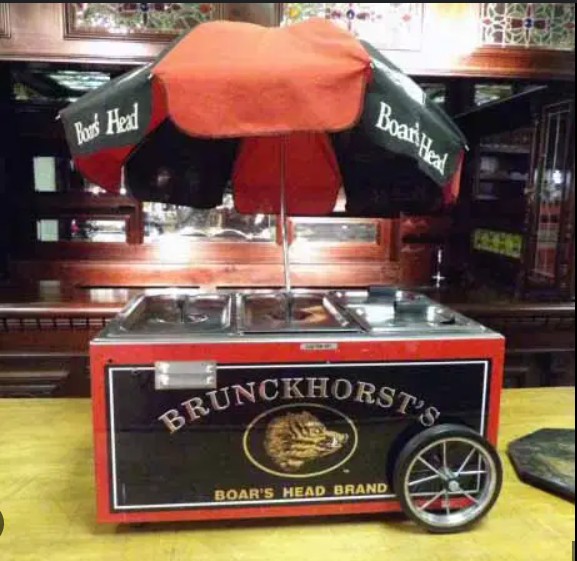
This is a quote from a deposition in a federal court shareholder oppression case: The man being deposed is a ‘top executive’ of a privately held billion dollar corporation:
Question: Who is the CEO of your company?
Answer: I’m not sure.
The company is Boar’s Head, and that executive has been at the company for twenty-two years. He was not lying. No one, in or out of the company, knows who runs it.
Boar’s Head may be the most private privately held company in the country. As one
former executive put it, “very privately held to the point where it’s very siloed.”
There are few names above mid-management on the company’s website. Secrecy
permeates the rank and file as well; “even senior employees know few details about
financials and sales.”
Email in the executive suite is not a thing. Upper management almost always communicates directly, face-to-face with employees. Purveyors – the people who transport and maintain the Boar’s Head section in every store – sign highly detailed contracts but aren’t allowed to keep copies of them. Once they sign, the contracts are whisked away to a secure facility, and the purveyors are handed a list of some of the rules.
Boar’s Head started in 1905 as a joint venture between two families in Brooklyn, NY.
Over the decades and expansion across the U.S., subsequent generations of the family have kept an iron grip on every aspect of the company.
Grandchildren, great-grandchildren, and sets of cousins have been involved in the company over the last 120 years sharing one trait: maintaining complete secrecy. One family/business leader was described in 2005 as the ‘Jay Gatsby of the Meat Industry’ which, along with evoking some wild images, seems to
sum it up nicely.
This worked great for the family as the company grew into the specialty meats
behemoth it is today – even after the listeria outbreak a few months ago. Not so much
now, however. The cracks have nothing to do with the listeria outbreak and
subsequent recalls, plant shutdown, and coming lawsuits. They come because of the
secretive structure of the company.
It was probably inevitable that, right around the company’s 100th anniversary, family
relationships would fray, then snap. Ownership shares were disputed. Dividend
payments were challenged. The first lawsuit was filed.
The deposition quoted above is from an article in the New York Times that dives into the history of the Boar’s Head and the secrecy that surrounds the company. That article doesn’t exit without the lawsuit.
There’s a lesson in there for every business owner.
Labor Day (AI & Railroads)
We can thank our railroads for Labor Day. A series of railway strikes in the 1870s-80s were severely put down by American Presidents who professed to be pro-union. They needed the union vote even while they were crushing strikes.
That dichotomy was never starker than in 1894 when workers at the Pullman Railroad Car Company in Chicago walked out. The company’s owner, George Pullman, had cut workers’ wages by 25% without warning. Pullman employees rented their homes from Pullman and bought their groceries and essentials from Pullman-owned businesses. He did not roll back rents or prices after the wage cut.
Pullman workers walked out, and railroad workers around the nation joined them. Grover Cleveland ordered the National Guard in, and things turned violent. By the time the strike ended, 30 strikers were killed, and 57 were wounded. The strike failed.
Labor Day parades had been held around the U.S. since the early 1880s. Cleveland proposed that it be made a federal holiday celebrated the first Monday of September. Congress passed the act, and he signed the bill into law six days before that First Labor Day in 1894 was celebrated . . .two months before the mid-term elections. (It did not help him, the Democrats were eviscerated.)
Speaking of railroads, fun fact: : the distance between railroad tracks in the U.S. is 4 feet, 8.5 inches. If you knew that, you probably know the story behind such a seemingly arbitrary measurement. It goes like this:
Why was that gauge used? Because that’s the way they built them in England, and English expatriates designed the U.S. railroads.
Why did the English build them like that? Because the first rail lines were built by the same people who built the pre-railroad tramways, and that’s the gauge they used.
Why did ‘they’ use that gauge then? Because the people who built the tramways used the same jigs and tools that they had used for building wagons, which used that wheel spacing.
Why did the wagons have that particular odd wheel spacing? Because wagon wheels would break on some of the old, long-distance roads in England, and that’s the spacing of their wheel ruts.
Who built those old, rutted roads? The Roman Empire built the first long-distance roads in Europe (including England) for their legions. Many of them are still in use after centuries.
And the ruts in the roads? Roman war chariots formed the initial ruts, which everyone else had to match for fear of destroying their wagon wheels.
Since the chariots were made for Rome, they were all alike in the matter of wheel spacing.
Therefore, the United States standard railroad gauge of 4 feet, 8.5 inches is derived from the original specifications for a Roman war chariot.
This logical line covering twenty-one hundred years of history is well-known and at-your-fingertips-ready with a simple Google search (we did one as we wrote this). It’s a piece of history that’s repeated and repeated and makes for a great pub trivia question.
With that setup, long-time newsletter readers know where this is going: it isn’t true. If you look at the steps closely enough, they don’t individually hold up. But you don’t have to go through them one at a time; just go to the last piece of the puzzle (or first, depending on how you view time): the Romans did not use ‘war chariots.’ They used chariots for racing, which is the end of the story.
In fact, their enemies in the British Isles – the Celts – used war chariots, so the Romans were hardly building roads to accommodate them.
Despite its fragileness, this story persists. It’s debunked, the reasons explained, and it still won’t die. This is one of those “Oh, man, that’s a myth; here’s the real deal” things where people who learn the real story nod, shake their heads, and go right back to telling the myth in a couple of weeks.
Why? Simple, it’s a great story.
It’s a fun story. It’s an entertaining, easy answer for what would otherwise be a complex explanation – and probably one that no one would ever remember.
This story will never die because it is fun. People love stories. They don’t want to be told that a story this good is wrong. You don’t ‘fix it’ by telling someone it’s wrong. You fix it by telling a more compelling story. It’s not easy, but if the stakes are high, you have to.
That last paragraph sums up a lot about what a good attorney’s job is.
A Good Book
“On April 11, Lewis Perdue sat on a bench in a gallery on the 17th floor of Manhattan’s Thurgood Marshall United States Courthouse and did his best to contain himself. Before him, a panel of judges from the Court of Appeals for the Second Circuit debated his future. As Perdue’s lawyer launched into a tortuous and somewhat odd explanation to the court about how, as a science-fiction buff, he was a big fan of Frank Herbert’s “Dune” series, Perdue tried in vain to suppress a sigh. Then he began to rock back and forth.” ~ Vanity Fair, July 2006
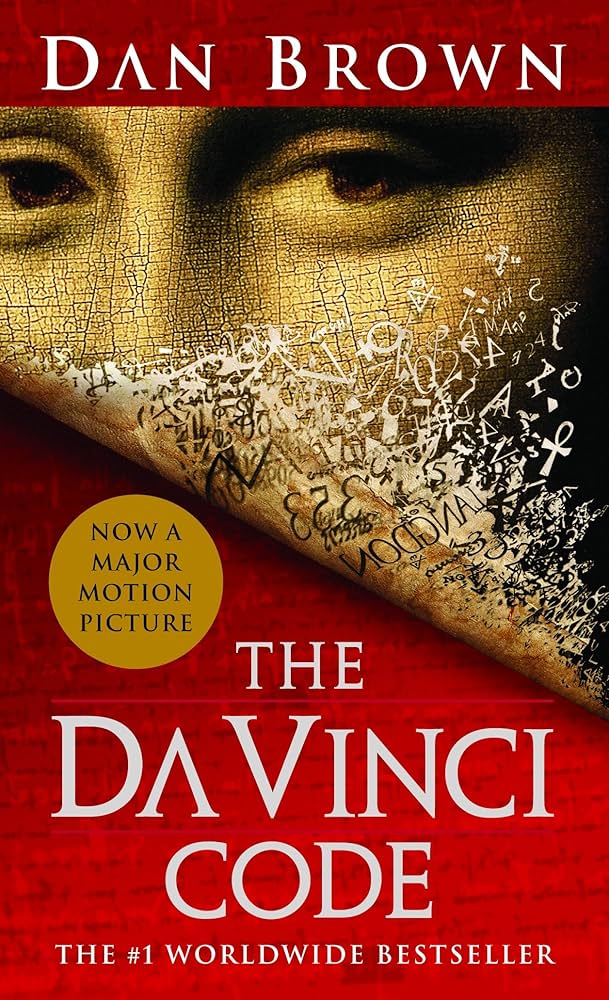
In 2003, Dan Brown’s The Da Vinci Code took the publishing world by storm, shot to the top of the bestseller list and didn’t leave for a very long time. Also in 2003, a guy named Lewis Purdue picked up a copy like just like everyone else and dove into the story of the Illuminati and the Holy Grail.
Lewis was . . . appalled; he had read the story before, been invested in the same characters before — they were from a book he wrote in 2000, Daughter of God.
The Da Vinci Code quickly became the bestselling novel of the 21st Century, Lewis wrote a letter to Brown’s publisher – Doubleday – almost meekly asking for an acknowledgement that Brown had lifted the plot from him. Doubleday’s law firm responded with a demeaning, patronizing letter that not only dismissed him but offered to send him case law so Lewis ‘could educate’ himself.
That sent Lewis off to find lawyers of his own around the same time Tom Hanks was being announced as the lead for the movie.
Lewis got a law firm near his California home to take his case on a contingency basis. They found a professor at UCLA, an expert on libel, copyright and intellectual property, who conducted an in-depth analysis of both books and concluded:
“Daughter of God and The Da Vinci Code employ identical narrative strategies… These novels share the same background story, not only in the personages and events they refer to, but more important, in the identical ways they distort these historical events to support their nearly identical stories… The expression of this story in The Da Vinci Code is substantially similar to the earlier expression of the same story in Daughter of God.”
With that in their arsenal, Lewis’ law firm issued a cease and desist order to Ron Howard and his production team and announced they were ‘getting’ ready to sue.
Big mistake. Doubleday and Brown rushed to a federal court in New York to ask for an injunction, thereby moving jurisdiction to New York for good. Lewis had to get a new law firm thousands of miles from his home. Meanwhile, Brown was also being sued in London by another set of authors for stealing their idea. Within months, several more claims also popped up though they were not pursued in the courts. One of those authors put the matter succinctly, “The feeling I got, and what I’ve heard from a lot of people in the community, was that [Brown] was a kind of literary vacuum cleaner: he went through the literature and stuff got sucked up and blended together into a kind a mélange.”
These other matters fueled Lewis, who somewhere along the line became completely and utterly fixated on his case . . . to the point where he stopped writing or, in fact, doing anything constructive while he waited for justice.
Brown won the London case, but not without taking some real hits to his reputation and vaulting the other writers’ book, written in 1982, back on the bestsellers list.
Out of the London case came this: John Olsson, the director of Britain’s Forensic Linguistics Institute, reviewed Lewis’s book and wrote, “This is the most blatant example of in-your-face plagiarism I’ve ever seen. There are literally hundreds of parallels.”
At this point, Lewis was openly telling friends and family that when he won the lawsuit against Brown “everything he has is mine.”
Apparently, his hopes and faith in his case ran unchecked by his lawyer, the guy who was only going to get paid if Lewis won. Also the lawyer who had quite obviously never read either book. The man who appealed to the Second Circuit and talked about his favorite Sci-fi book.
Of course, he’s also the lawyer who never warned Lewis about the near impossibility of his suit. Never mentioned that historical fact and theories are not protected by copyright law. Nor, really, is a plot line that incorporates bits and pieces of ancient conspiracy theories and the best of Coast to Coast AM.
He also, most assuredly, did not warn Lewis that expert testimony was basically worthless in a matter where “case law maintains that an average lay reader and not an expert should determine the standard for copyright infringement.” Nor had he explained that they would, eventually, have to show how Brown’s book impacted the sales of Lewis’ book.
Lastly, he didn’t warn Lewis about the Judge. Just before the case began, the trial judge was eviscerated by a front page story in the New York Times:
JUDGE’S DECISIONS DRAW NOTICE FOR BEING CONSPICUOUSLY LATE
The judge had the worst late record of any of the “1,500 active and senior Federal District Court judges and magistrates in the United States.” The worst.
It did not take a legal genius to know what was going to happen to every pending case in the judge’s court after that.
The defense submitted a brief that mischaracterized Lewis’ book, getting characters and plot lines mixed up, perhaps on purpose to obfuscate the parallels. Lewis’s attorney did not refute any of it, he just regurgitated their argument.
The judge accepted the briefs and promised to read both books before coming to his decision. That decision was rendered in record time. Lewis lost. Lewis ran the judge’s lengthy opinion through plagiarism-detection software developed by a physics professor at the University of Virginia – his decision had been lifted virtually word for word from the defendants’ filings. . . without attribution.
His Dune-obsessed, getting paid on contingency lawyer, however, did not ‘do appeals.’ The case died.
So this: Free legal advice/help/opinions are worth exactly what they cost. No one does a copyright case on contingency unless the case is a clear winner, such as ‘no possible defense; he copied my 450 page book and just slapped a new cover and his name on it’ uncontested layup.
Anything less that that requires a serious retainer after a thorough ‘here’s all the things that can and probably will go wrong’ discussion/warning. Of course, only an attorney with deep knowledge and years of experience in the field can do that.
That’s it. Poor Lewis may never have gone through any of this (he did, however, not have to pay the publisher’s legal fees after he lost) if an attorney who knew the field had had a long, honest, heart-to-heart with him before doing anything. Nor would one have tipped off the publisher by threatening a suit via an almost utterly bogus, premature cease and desist letter.
Only go to attorneys who know their field. Intimately.
News!
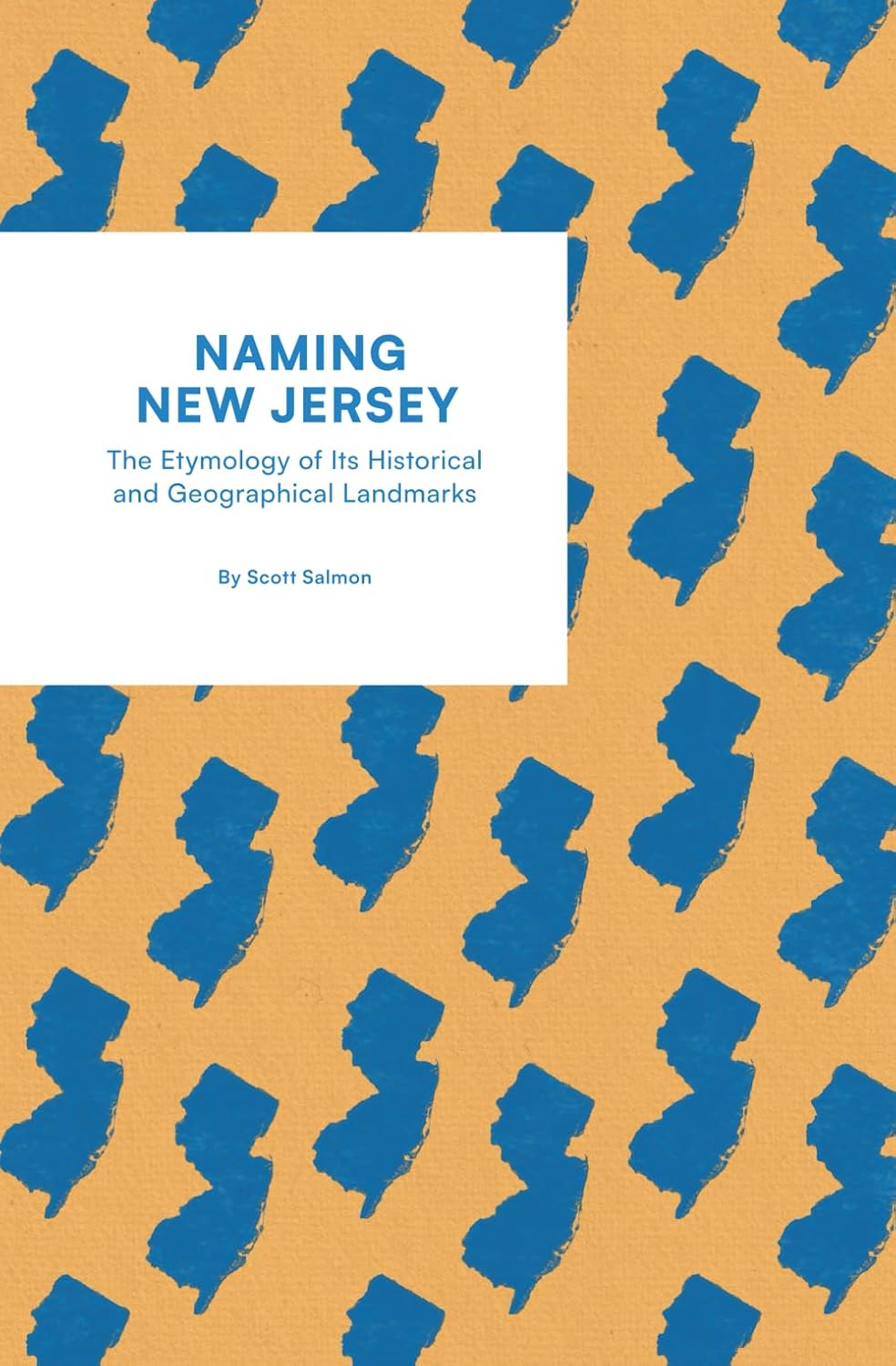
Scott Salmon has published his first book!
Naming New Jersey has just been published on Amazon as a handsome trade paperback, a hardcover version is also on the way!
From Scott:
For as long as I can remember, I’ve wanted to write and publish a book. And after four years of researching, writing, and editing, I’ve finally done it. My new book, “Naming New Jersey: The Etymology of Its Historical and Geographical Landmarks” is now for sale on Amazon.
It explores the origins of nearly 850 towns, neighborhoods, and landmarks across New Jersey. If you’ve ever wondered where places like South Amboy, Wyckoff, Garret Mountain, or the Tuckahoe River got their names, this is the reference guide or coffee table book for you.
This isn’t about money for me though, so 100% of proceeds will go to charity. Every sale supports Bridge of Books Foundation, a New Jersey-based nonprofit that donates books to children in underserved communities throughout New Jersey. I hope you consider buying my book.
Jon Oliver on The DaVinci Code
(If you loved the book, you might want to skip this).

Don’t Miss an Issue
Haven’t subscribed yet? Agree with Homer? Then don’t miss another issue, subscribe now. And . . . if you know someone who may enjoy this, please feel free to forward this issue to them.