
Waiting for The Running Man
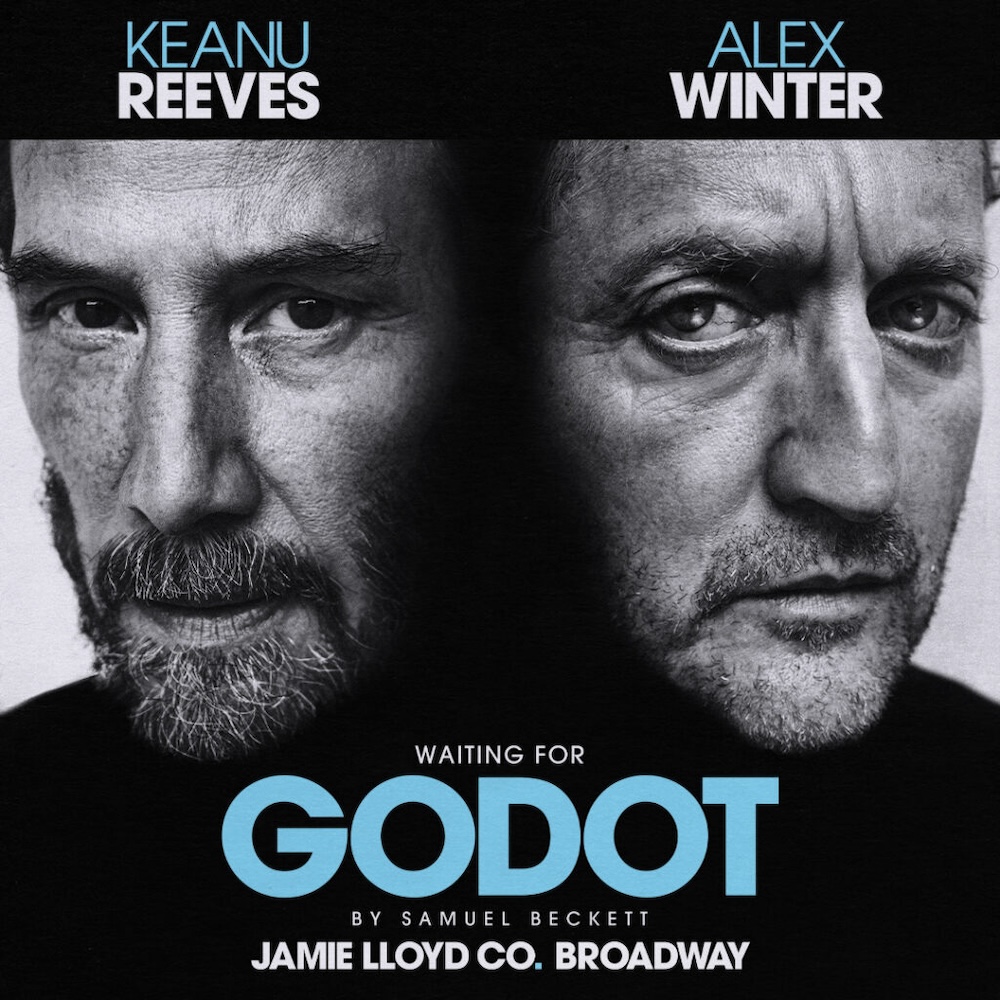
It’s one of the hottest tickets on Broadway in some time—Keanu Reeves and Alex Winter in Waiting for Godot.
I caught them both on a talk show the other day and was struck by something they shared. The host commented on the way they were pronouncing Godot. Keanu Reeves said, “We’re pronouncing it God-oh because we feel it rhymes better with much of the dialogue and has a better comic effect.”
Okay, interesting . . . but it didn’t sit well and it didn’t seem quite right. Not because it doesn’t make sense but because Waiting for Godot might be the most strictly controlled written property ever.
Samuel Beckett didn’t leave things to chance. Known for his minimalist, exacting style, Beckett approached his literary and personal affairs with the same precision he applied to his writing. He understood intimately the power of details—the careful placement of words, the exact timing of pauses, the subtle nuances in staging. Every element mattered deeply to him, and he took extraordinary measures to preserve his creative vision.
As part of his estate planning, Beckett established specific instructions to govern productions of his work after his death. Unlike most playwrights, who accept that their plays will inevitably evolve and adapt, Beckett explicitly limited interpretive freedom.
Through the executors of his estate, he ensured productions adhered strictly to his original directives. Each staging, each line delivery, even aspects like set design and costuming must comply meticulously with Beckett’s specifications. The estate is famously vigilant, swiftly intervening whenever productions stray too far from Beckett’s detailed instructions.
Further complicating matters, the Irish Beckett actually wrote Waiting for Godot in French, adding yet another layer of complexity to the play’s interpretation. Most scholars believe he was not ‘fond of’ the American pronunciation “Go-doh,” underscoring just how precise his intentions were regarding every element, down to phonetic details.
This extraordinary control creates tension for actors, directors, and producers, who must walk a fine line between their creative impulses and Beckett’s uncompromising rules. The guardians of Beckett’s legacy see themselves not as rigid gatekeepers, but as faithful stewards safeguarding the author’s intentions. For them, every performance is an affirmation of Beckett’s vision—nothing less, nothing more.
Indeed, the meticulousness of Beckett’s estate extends to famously minute details. It’s been reported that the estate approved the exact number of leaves allowed on the tree in the background during the second act.
Putting on Waiting for Godot is entering an intellectual property minefield.
Back to Reeves and Winter: their seemingly casual decision on pronunciation certainly wasn’t casual and certainly wasn’t done in a vacuum.
As theatergoers line up eagerly for Reeves and Winter’s turn as Vladimir and Estragon, they may not realize they’re watching more than a play—they’re observing an intricate dance between Beckett’s exacting legacy and contemporary artistic impulse. It’s a delicate balance where a small shift—even a change in pronunciation—can resonate through the carefully controlled universe that Beckett left behind.
Still, it was the writer’s wish, and writers the world over can only look on with envy at the extraordinary control Beckett continues to command over his work. Maybe that’s exactly as Beckett intended, after all.

At the opposite end of the literary control spectrum is Stephen King. We’re just a few weeks from the release of Edgar Wright’s highly anticipated new adaptation of The Running Man. The 1987 film based on King’s short story starred Arnold Schwarzenegger and was, like Stanley Kubrick’s adaptation of The Shining, despised by King. He was troubled enough by Arnold’s The Running Man’s departure from his original, dystopian vision—his biting social critique was largely replaced by action hero spectacle—that he sued to have had his name removed.
King’s unhappiness with many adaptations of his work is legendary. He rarely lets any discussion of The Shining go without riffing on Kubrick’s “Cadillac with no engine,” emphasizing that while visually stunning, the film lacked the emotional core and supernatural tension he had carefully crafted. He expressed frustration with CBS’s streaming adaptation of The Stand, criticizing it for fundamentally misunderstanding the character of Randall Flagg.
Any discussion of the adaptations leads to a kid’s game of eeny-meeny: Shawshank Redemption? Great. The Mangler? Idiotic. Misery? Fantastic. Dreamcatcher? Mess. Stand By Me? The best. The Dome? “Hated it . . . it was a betrayal.”
There’s more but by now you get the point. Unlike Beckett’s estate, King rarely sues to protect his vision but, boy, does he do a mean tweet(s).
Now, King is eagerly awaiting Edgar Wright’s film. Wright, for his point, swears this version is true to King’s original intent. Will it be an adaptation that King embraces? That’s not really the question—the real question is “if it means so much to King why doesn’t he already know?”
Beckett chained his legacy to his exacting will; King set his loose in the wild and then wonders why it comes back tattered. Beckett meticulously secured his literary legacy through the careful, detailed oversight of exceptional lawyers who understood precisely what was at stake. Every adaptation of Beckett’s work remains a clear reflection of his intentions, safeguarded by a rigid and carefully watched legal framework. King, conversely, seems to hand off his creations with a shrug, trusting Hollywood’s good intentions . . . or perhaps simply hoping for the best.
Here’s the thing: at this point, the problem isn’t Hollywood. It’s King.
He can be forgiven for the early years, when money was tight, kids were small, and a big check from Brian DePalma (yes, King liked the original Carrie) meant the difference between writing full‑time or going back to grading essays and patching drywall. But that era ended by his third book. Since The Shining, King has had more clout than most authors could dream of—yet he’s repeatedly handed over his work to filmmakers who miss the point, then stood outside the theater fuming about what they did to it.
Beckett chained his legacy to his exacting will; King sets his loose in the wild and then wonders why it comes home with bite marks.
If King wants the control, it’s there in a lawyer’s office for the taking.
High Fashion, Low Drama

Nothing collapses a carefully curated high-fashion, jet-setting image faster than a lawsuit that reads like a 1970s Sidney Sheldon potboiler turned into a made-for-TV movie starring D-listers.
The Vanity Fair version of this story: private jets, three houses in exclusive enclaves, fashion shows, the Met Gala, and a neat story about two business acquaintances who fall in love and end up sharing the same desk. Accompanied by a 14-page glossy spread with eight pages of images that would put the Robb Report to shame.
Natalie Massenet built Net-a-Porter and later the venture firm Imaginary Ventures with Nick Brown. Erik Torstensson co-founded the agency Saturday Group and the denim label Frame and invested in Skims. They were partners in life and worked together frequently. Now they are suing each other on two coasts, and the critical issue is not the gossip but the missing documentation that clearly delineated their overlapping business and personal lives.
Her California complaint alleges he took her for roughly $95 million—money, introductions, and access—under promises of repayment and shared financial upside that never materialized. Torstensson’s New York filing counters with a bevy of defenses, a custody claim, and a long list of her shortcomings and addictions. A further—and perhaps more worrying—accusation from Massenet’s side claims she was left “cash-strapped with her child” after shouldering a lavish lifestyle under promises of repayment. “Cash-strapped” to investors and shareholders is the equivalent to trying to feed the grizzlies in Yellowstone.
The filings are public and already inflicting collateral damage: their child, a fund with outside LPs (Imaginary Ventures), a fashion brand he helped build (Frame), and a global consumer company they are both linked to in different ways (Skims). Once these filings became public, partners and boards began issuing statements and creating distance but values and future deals are already taking hits.
This is a mess that is headed for a total, public, disaster. It’s almost—almost—inconceivable that two apparently seasoned business owners did all this without any agreements. They funded one another’s businesses with no clear terms, no equity stakes were spelled out. Finder fees were implied but never codified. They talk about sweat equity without the hint of vesting schedules.
Expenses were commingled and apparently never reimbursed – of course, there’s no documentation as to which company incurred which expense.
Almost inconceivable and yet that’s what Massenet and Torstensson did. It did not require a crystal ball to see where this was headed. A few contracts, confidentiality and non-disparagement agreements, mediation and arbitration clauses across the board and this conflict remains private. Instead, we’ll be following this across the media for the next year—at least—while the value of the companies involved plummet.
Card Wars: Contracts, Trade Secrets, and the Battle for the Collectibles Market

The trading-card industry, built upon exclusivity and speculation, has descended into a fierce legal battle involving two major behemoths: Panini and Fanatics. A proposed deal between these giants collapsed spectacularly, setting off accusations of employee raids, stolen trade secrets, and restrictive client contracts.
The backdrop: Fanatics, already the owner of industry stalwart Topps, further tightened its grip on the market by securing exclusive long-term licenses with the NBA, NFL/NFLPA, and MLB. Additionally, it formed Fanatics Collectibles with these leagues and their players’ associations as equity partners. According to Panini, Fanatics then took aim directly at Panini’s workforce and business operations.
In its federal antitrust lawsuit and a separate trade-secret case in Texas, Panini alleges that Fanatics engaged in deliberate employee poaching, theft of sensitive trade secrets (including accusations of exiting staff taking confidential hard drives), and interference with critical suppliers, including a key printing partner and access to valuable jerseys and autographs. Panini also claims Fanatics’ contracts with leagues and athletes are overly restrictive, suffocating competition and innovation in the marketplace.
Fanatics emphatically counters, asserting they simply outmaneuvered Panini through strategic business decisions, including stronger financial guarantees to leagues, equity partnerships offering substantial upside, and more aggressive marketing initiatives. Fanatics dismisses claims of trade-secret theft, asserting that any sensitive materials have been returned and that Panini’s accusations are an attempt to limit employee mobility unfairly. Fanatics further points to a failed buyout offer—exceeding $2 billion—in 2022-23, emphasizing that Panini’s sudden antitrust concerns only arose after negotiations collapsed.
As it stands, the federal antitrust case has survived initial motions and is deep into discovery, while the Texas trade-secret litigation advances. Additionally, hobby-shop class actions against Fanatics are emerging. Both Panini and Fanatics are investing substantial resources in their respective legal battles, yet neither has secured a decisive courtroom victory to clarify or stabilize the marketplace.
Collectors and industry insiders alike face uncertainty. High-profile card sales continue to capture headlines (such as recent cards featuring Caitlin Clark and Paul Skenes), providing temporary optimism within the market despite the legal turmoil.
The central, unanswered question is crucial for the future of the collectibles market: Can an industry thrive if one entity holds exclusive licenses, employs critical talent, controls market access, and effectively sets the marketplace rules? Until the courts render a decision, both the legal and economic implications remain uncertain. The resolution of these cases will shape not only the trading-card industry but the broader conversation around fair competition and market exclusivity.
Update on the Celtics Sale Heading into the New NBA Season
The NBA season starts next Tuesday. Seven months ago, when we first reported on the proposed sale of the Boston Celtics, it looked like there was a strong chance that the pre-season guides and prognostications might be been talking about a Boston Threepeat. Then the team almost literally fell apart.
The sale, though, went through and finally closed last month. Then reality quickly set in. Wyc Grousbeck, the trusted face of the franchise, unexpectedly departed despite expectations – not to mention a clause in the sales agreement – to the contrary. Within days, the Boston Celtics’ once-familiar roster became barely recognizable while rumors swirled that Jaylen Brown—the team’s crucial All-Star—is headed to the trading block. With cap issues mounting, a thinning roster, and Jayson Tatum sidelined by a potentially [read: definite] season-long Achilles recovery, one has to look at the hefty sales price questionably at best.
Then there’s the issue of the arena. Despite the Celtics’ longstanding legacy, they remain mere tenants at TD Garden, reaping none of the substantial profits from concerts, Bruins games, college basketball and hockey, or other events. The lease with Delaware North extends until 2036, creating a significant revenue gap that the new owners clearly want [need is much more likely] to close. Their ideal scenario is a basketball-first arena within Boston, a city historically resistant to major infrastructure changes.
The shortlist of potential sites reads like a who’s who of smashed urban dreams—Everett’s industrial zone near the casino, the rail yards of Widett Circle, the Allston interchange redevelopment along I-90, Gillette’s South Boston Fort Point campus, Dorchester Bay City, and the sprawling site at Suffolk Downs. Each location has held an El Dorado hold over developers for generations. That’s right, not years, generations. Each location is rife with its own brand of Boston-specific headaches, from political roadblocks and transit issues to entrenched local resistance to the last remnants of certain elements from The Departed.
Boston, famously, is where ambitious arena projects go to be garroted by layers of bureaucracy and local opposition—a fact well-known by Robert Kraft, whose pursuit of a city-based soccer stadium has lasted over a decade without a glimmer of a resolution. Proposals are never moved by sheer logic or business savvy; they’re advanced when political stars align, local objections are navigated, and every imaginable community group is satisfied. Even then, projects often lose out to bureaucratic inertia and entrenched interests.
In the near term, new ownership will emphasize flexibility, site control, and attempts to renegotiate better terms on the current lease. They’ll confront roster instability and salary cap constraints, which fans will undoubtedly find frustrating, especially given Tatum’s injury. They will be surprised – but shouldn’t be – that they will get no honeymoon period from the rabid Celtics fan base.
Ultimately, the team’s real valuation hinges on resolving the arena question. If they successfully break ground, the Celtics finally become landlords rather than tenants. If they can’t, they remain guests in their own city, watching Delaware North pocket profits from events completely unrelated to basketball.
The gamble behind their enormous $6.1 billion investment assumes that a new arena is just around the corner—a bet placed against Boston’s deeply entrenched procedural culture. This is a city where upgrading an iconic high school athletic stadium took over thirty years (that is not a misprint) and transformative projects stall amid endless stakeholder debates. The process is a maze involving local boards, neighbors, activists, state agencies, transportation authorities, and, again, certain elements.
Combine this bureaucratic slog with the inevitable reality that the new ownership group will soon approach taxpayers and officials asking for land, infrastructure improvements, and public approval. And they’ll be doing it with the Celtics fighting not for a championship, as expected, but merely to reach the play-in for the playoffs.
Owning their own building is the only strategic vision that makes this anything more than a vanity purchase. The charming optimism of the Celtics’ new owners about navigating Boston’s notorious development process is admirable but naïve. They’ll need patience—and deep reserves of resolve—to navigate the inevitable heartbreak and frustration ahead. Boston always sets its own schedule and you have to wonder if any of the buying group’s attorneys mentioned that reality anywhere along the way.
Scott Shares the Misery

Scott Salmon’s Book
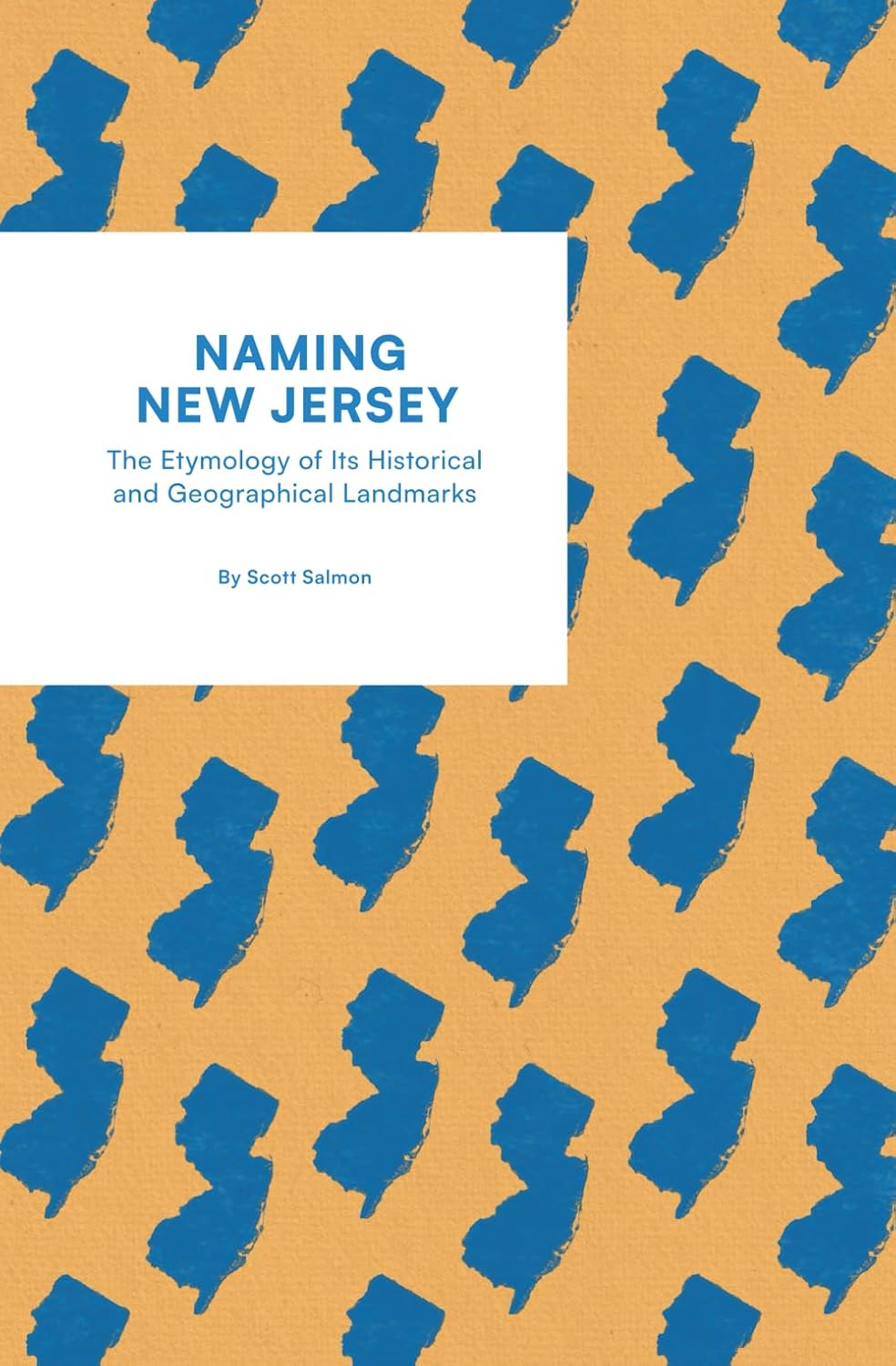
Scott Salmon has published his first book!
Naming New Jersey has just been published on Amazon as a handsome trade paperback, a hardcover version is also on the way!
From Scott:
For as long as I can remember, I’ve wanted to write and publish a book. And after four years of researching, writing, and editing, I’ve finally done it. My new book, “Naming New Jersey: The Etymology of Its Historical and Geographical Landmarks” is now for sale on Amazon.
It explores the origins of nearly 850 towns, neighborhoods, and landmarks across New Jersey. If you’ve ever wondered where places like South Amboy, Wyckoff, Garret Mountain, or the Tuckahoe River got their names, this is the reference guide or coffee table book for you.
This isn’t about money for me though, so 100% of proceeds will go to charity. Every sale supports Bridge of Books Foundation, a New Jersey-based nonprofit that donates books to children in underserved communities throughout New Jersey. I hope you consider buying my book.

Don’t Miss an Issue
Haven’t subscribed yet? Agree with Homer? Then don’t miss another issue, subscribe now. And . . . if you know someone who may enjoy this, please feel free to forward this issue to them.