Of Vikings & Sidewalk Rats

Ada Palmer’s wonderful new book, Inventing the Renaissance, is a funny, somehow irreverent and scholarly at once look at one of history’s most comfortable myths — that civilization crossed over from the Dark Ages to Michelangelo, Da Vinci, and the rest virtually overnight.
As she elegantly illustrates, those labels weren’t discoveries; they were inventions. They made a messy and uneven human story seem linear and noble. Once the terms stuck, every historical event, every invention, and artistic wonder was pigeonholed to fit the narrative.
As a sort of mini course on ‘dogma’ and a perfect illustration of her point, Palmer talks about the Norse colonies in Greenland. For two centuries, historians told the same story. Erik the Red settled in Greenland in 986 AD. It was a flourishing settlement that traded widely with Europe, but it completely disappeared by the mid-1300s because the Vikings clung to their farms, refused to fish because it was culturally unacceptable, and starved when the climate turned. The proof of the theory: no one had ever discovered fish bones in a Viking village. An easy story to process, and we got to blame the Vikings for their own demise as well.
This was the accepted story until the 2010s, when excavations of the settlements that employed modern chemical analysis using isotopes made a fairly simple discovery: there were traces of a marine diet everywhere, but no bones. No bones, because someone finally figured it out, though the evidence was there in the Inuit villages nearby: they used every part of the fish; bones were ground down and used to feed cattle and as fertilizer. Moreover, the Vikings didn’t disappear; they moved—a few to Newfoundland, most back to Northern Europe. The Vikings adapted. The real failure wasn’t theirs; it was ours, the storytellers who preferred the moral lesson to the facts.
A more recent example occurred in Chicago a few years ago. A cracked patch of concrete in Roscoe Village formed what looked like the indent of a ‘rat’ body. Photos of the ‘Chicago Rat Hole’ or ‘Splatatouille’ went viral. It became a local landmark. Tourists took selfies. Locals put candles, coins, and offerings in it. A neighborhood bar named a drink after it. Everyone loved the idea — it felt right for Chicago, a city of alleys and resilience. Someone filled in the patch, but it was quickly unfilled. Finally, it was cut out of the sidewalk and put on display at City Hall.
All along, however, there was little evidence that the indentation was a rat’s. It was just the easiest explanation. Until sometime last year, when Michael Granatosky, an evolutionary biomechanist at the University of Tennessee, visited Chicago. With a team of investigators (really, we couldn’t make this up if we tried), he compared prints and measurements, interviewed people in the neighborhood, looked at old photos, and more.
The indentation was most certainly not a rat; it was a squirrel. One that had fallen from a tree that had been cut down not long after impact. Even with proof in hand, most people still refuse to update the story. The rat fits better.
Greenland Vikings starved because they refused to eat fish. The Roscoe Square rat is a rat because it fits. Both are simple, neat, and tidy explanations.
Here’s the thing though, life is not neat and tidy. Ada Palmer’s message is that there was just as much disease, mindless violence, and various and sundry horrible things during the Dark Ages as there were in the Renaissance … but that’s too complicated for most people, including historians.
Any serious law matter – defined as anything that drives you to hire an attorney regardless of the underlying issue – risks being seen in these kind of black-and-white terms. Why? Because it’s easy — and certainly much easier than doing the rigorous research, analysis, and listening needed to get beyond the dogma.
Too many lawyers and law firms meet you, immediately pigeon hole your issue, and start planning and filing paperwork before you finish your story. That might work in some – maybe most – It’s efficient, sure — like calling a squirrel a rat and moving on — but it’s not accurate. And accuracy matters when your future, your children, and your finances are at stake.
A Tough Opening Month for the NBA
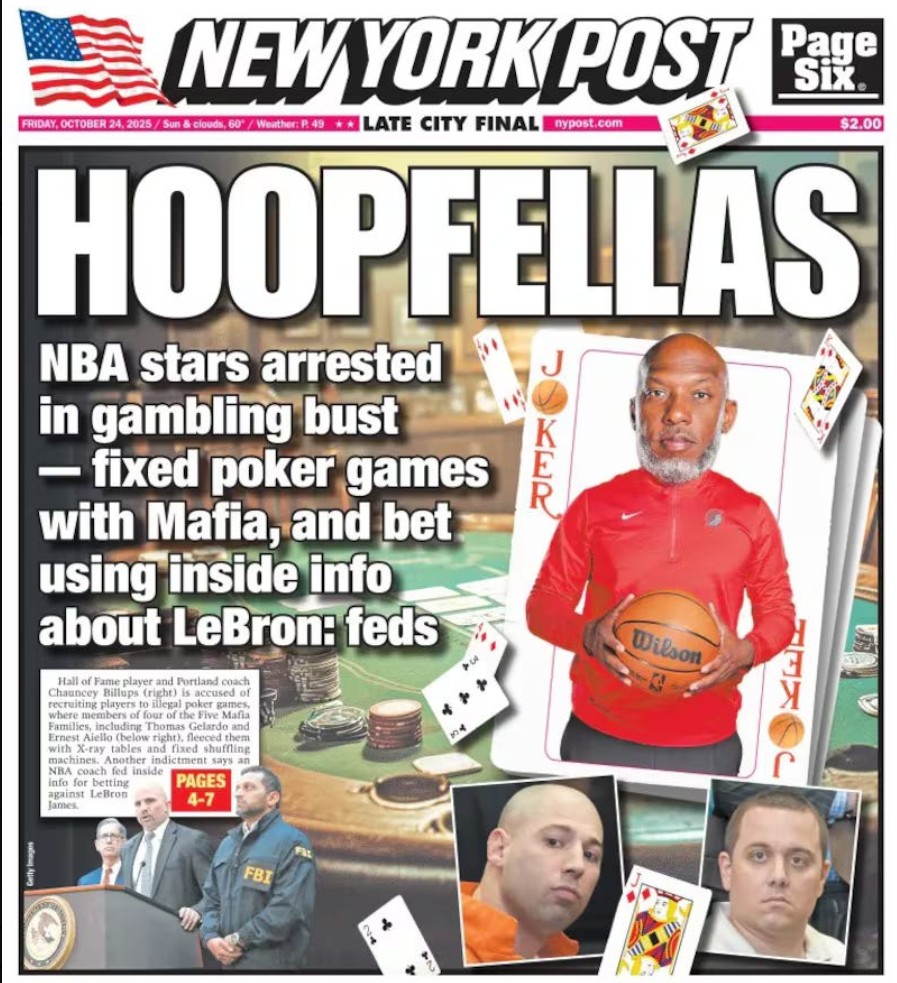
The NBA season always began two weeks ago with some fantastic games – all of them almost immediately overshadowed by gambling scandals and arrests – yes, plural.
One of the scandals involves Terry Rozier, a solid scoring, solid assist guard originally drafted by the Celtics, starring with the Hornets, and traded to the Miami Heat mid-season in January 2024 for their playoff push, He didn’t come cheaply, he cost the Heat a first round draft pick and six-time All Star Kyle Lowry.
A solid trade at the time, Rozier played well but missed the last eleven games of the season with a ‘neck issue’. Miami was beaten by the Celtics in the first round of the playoffs, Rozier did not play, his absence was cited by most as a reason the Heat lost in five games.
That was the story at the time, in any event. Now, with Rozier’s arrest . . . well, it definitely looks different. Rozier allegedly provided non public information about his own performance and exited a game early, enabling associates to place large “under” bets on his stats (An “under” bet is a wager that a player will finish a game with fewer than a specified number in a given stat category. If bettors know a player will exit early, they can win big by betting the “under” on points, rebounds, assists). On at least one game in March 2023, bettors placed tens of thousands of dollars on Rozier’s “under” stats in a game he left after nine minutes.
That’s right, March ’23 while he was with the Hornets. Not long after, the NBA began an investigation – the suspicious bets had been flagged by on-line gambling sites. Soon the FBI launched their own investigation on Rozier, part of a larger investigation into sports gambling that resulted in the much-publicized arrests a few weeks ago.
Perhaps you’ve already noticed the significance of the dates – if so, you’re right: Rozier was traded to the Heat while the NBA and FBI were investigating him. A couple more facts: the NBA was, of course, aware of the FBI investigation; the NBA approves all trades. The NBA let the trade go through without a word to the Heat.
In the real world, Miami would have a straightforward case for material breach, failure to disclose, and could plausibly ask to be made whole. In the NBA’s world, all they get is the chance to file a grievance, hope for a sympathetic arbitrator, and then accept whatever the league decides—if anything. Most often, the “remedy” is a reminder that next time, everyone’s on notice.
The Heat can protest, but they signed up for the league’s particular brand of due process. In the NBA, the only sure winner is the clause that says, “all disputes shall be resolved internally.”
A Legal Battle of Stalingrad
What do you do when you’re pretty sure you’re in the legal right, but ‘the other guy’ has infinite resources, not a whit of tolerance, and a well earned reputation for being of the scales litigious?
We’ll find out shortly: Morgan & Morgan (the self-appointed champions of cheesy billboards and personal injury excess) is pre-emptively suing Disney (the fortress of mouse-shaped IP enforcement) to ensure that Disney doesn’t sue them in the very near future.
While this may well be the litigation equivalent of the Battle of Stalingrad (i.e., if only both sides could lose) it does promise to – perhaps – clarify some important copyright and trademark issues.
Morgan & Morgan wants to use Steamboat Willie–era Mickey Mouse in an ad now that the version is in the public domain. We’re not really seeing the appeal of this particular ad beyond just poking Disney’s ever formidable legal team.
To be fair, Morgan reached out to Disney with a copy of the ad (above) and asked if they’d have any problem with them running it. Disney refused to answer beyond rather prissily pointing out that they were not in the habit of giving legal advice to other companies. Some may interpret that as “do it and find out.’
To be[grudgingly] fair, Disney risks the erosion of an IP fortress built up over generations and rigorously [some – like South Park – would say rabidly] enforcement.
Rather than wait to be served, Morgan & Morgan filed a declaratory judgment action in the U.S. District Court for the Middle District of Florida seeking a ruling that their ad does not infringe Disney’s trademarks or constitute unfair competition.
The underlying and core legal question is does the expiration of copyright for Steamboat Willie allow free use, or do Disney’s surviving trademark rights to all things mouse related block this usage?
So, again, Morgan is ‘suing’ Disney because Disney won’t say whether or not it will sue them. Somewhere in here is a perfect metaphor for 2025.
Nobody likes Disney when they pull this stuff, but nobody, outside of Morgan and Morgan, is waving pompoms Morgan & Morgan either. Another day in American IP law.
In a Perfect World . . .
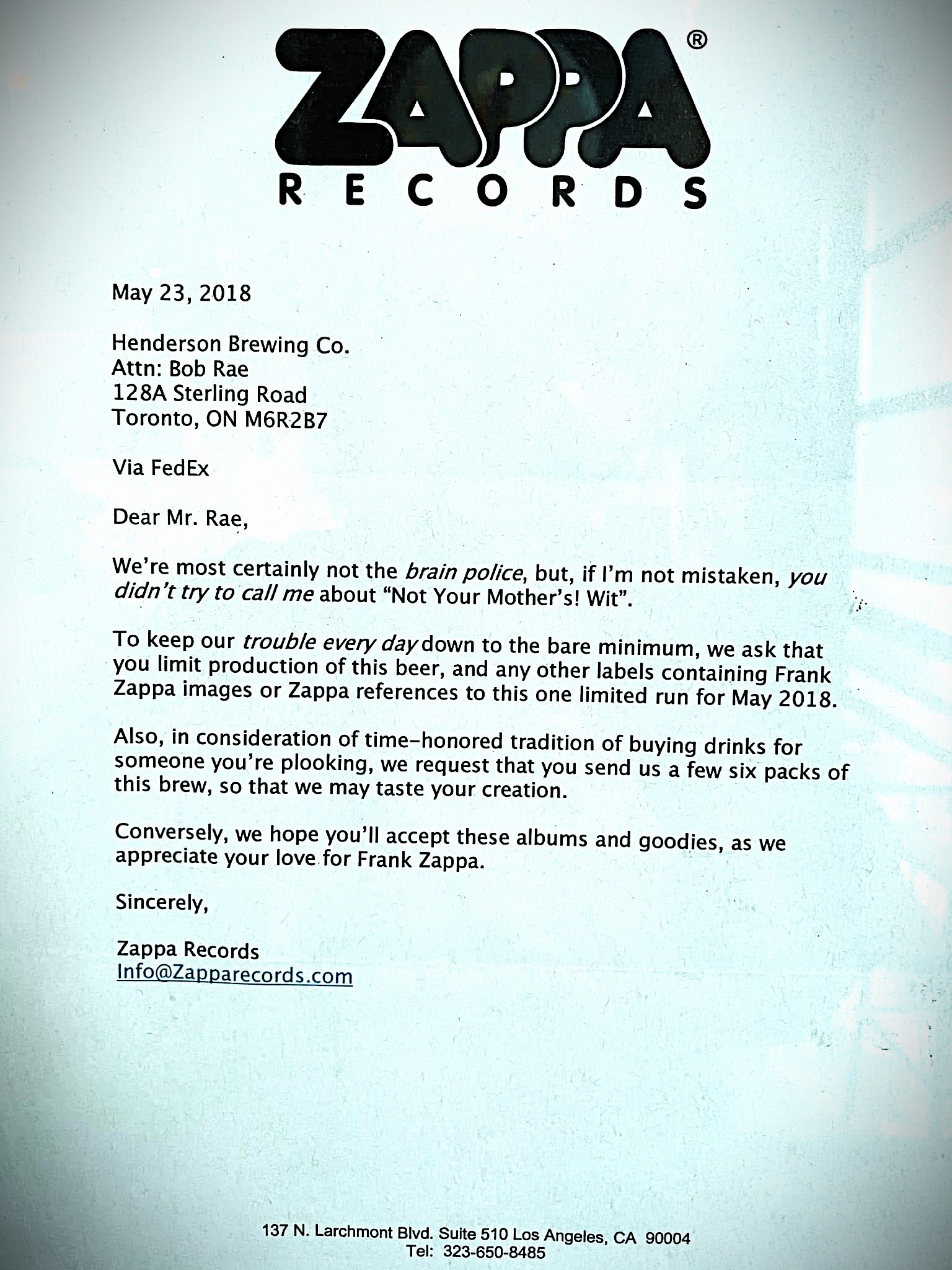
. . . all trademark/copyright issues would be handled like this.
Scott Salmon’s Book
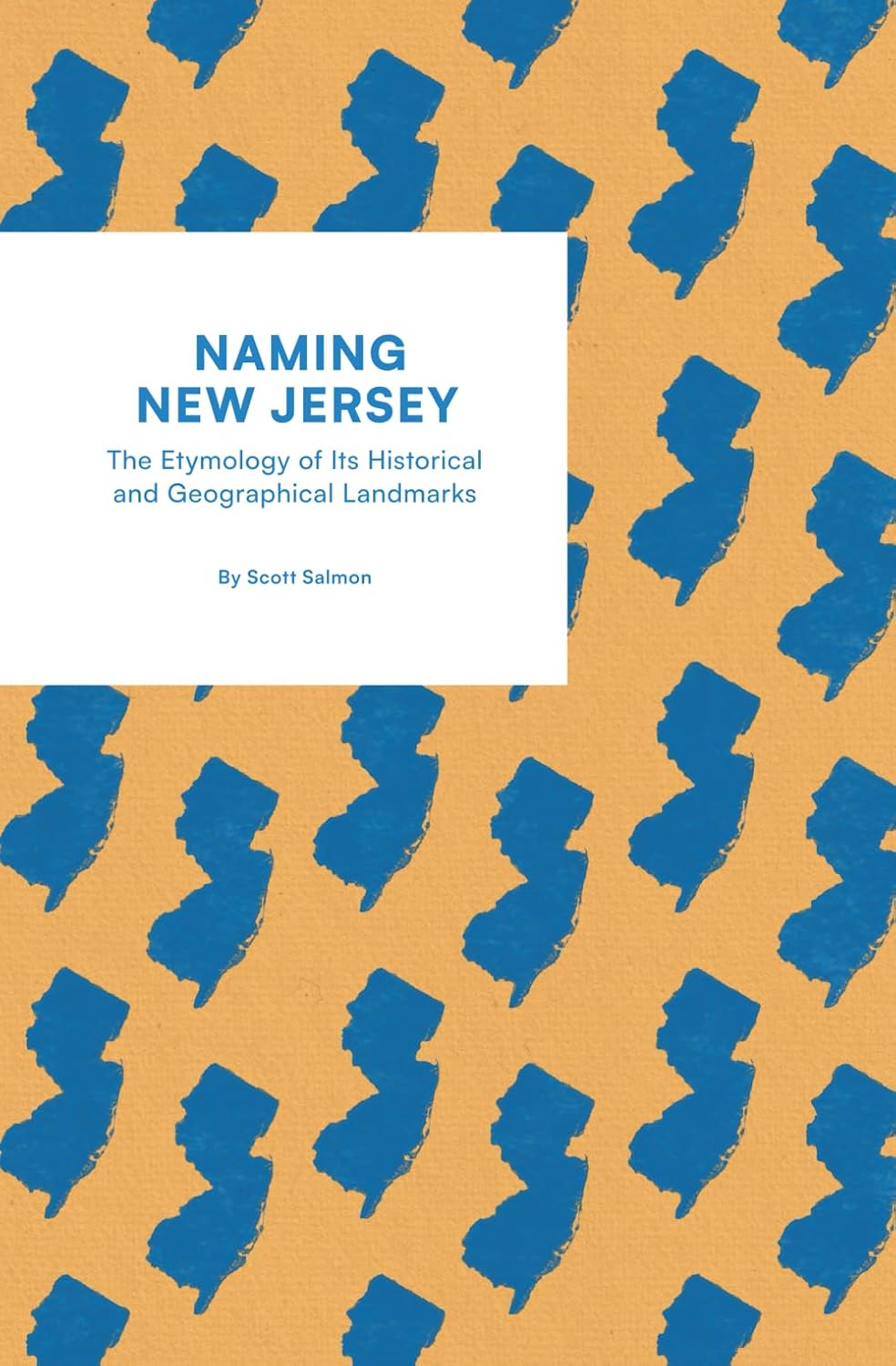
Scott Salmon has published his first book! Every sale supports Bridge of Books Foundation, a New Jersey-based nonprofit that donates books to children in underserved communities throughout New Jersey.
Don’t Miss an Issue
Haven’t subscribed yet? Agree with Homer? Then don’t miss another issue, subscribe now. And . . . if you know someone who may enjoy this, please feel free to forward this issue to them.