Happy St. Patrick’s Day!

It’s St. Patrick’s Day! So . . . here’s a story from Ireland.
A friend of the firm was on an extended tour to Ireland with a rugby team in the early ‘90s. In Dublin, they played the Wanderers, a team that had five players on the Irish National Team that had just won the Five Nations tournament – in effect, the European championship.
The Americans hung tough and suitably impressed the Dubliners, who threw them a dinner and gave them all-inclusive passes to the All-Ireland Hurling Finals the next day at historic Croke Park.
Quick aside: sports are huge in Ireland. Rugby is big. The national team plays in a new 51,000-seat state-of-the-art stadium that is always sold out. Irish fans are renowned for showing up on the road – anywhere – in enormous numbers and regaling the home fans with renditions of The Cranberries’ Zombie. Ireland has been the number one or two ranked team in the world for the last six years.
And yet, hurling is, without question, Ireland’s national sport.
Hurling is ancient – the first literary reference to it was in 1272 BC. It figures prominently in Gaelic mythology. It was banned by the British in 1366, 1798, and 1918. As late as 1921, hurlers caught while playing were arrested by the British Army.
Hurling, then, is baked into the Irish soul.
The game is a combination of hockey, lacrosse, baseball, rugby, and soccer. It’s played with solid wood sticks (hurleys); the ball (sliotar) is about the size of a baseball and just as hard. The object of the game is to hit the ball into a soccer-like goal (3 points) or through rugby-like goalposts (1 point). Hockey-like checking, if not full tackling, is allowed.
Players wear shorts, cleats, colorful shirts, and mouth guards. When our friend watched the game, light helmets were optional—they weren’t made mandatory until 2010. That’s it. No shoulder pads, no Kevlar vests.
The scariest thing in a game full of scary things is that players can flip the ball up in the air and smack it like a baseball coach hitting fungoes without regard to the players defending them.
The All-Ireland Hurling Final is the Irish Super Bowl. The last two all-county teams left standing play for the title.
The game my friend saw was fantastic, the crowd traded songs, county flags flew wildly, Guinness and Smithwick’s flowed. There were a few injuries, none serious—which was amazing.
After the game, our friend and his teammates were allowed down on the pitch and got to chat with some of the bruised, battered, and somewhat bloodied players.
His first question was obvious: “How do you not get killed?”
The answer was simple: “If you stay in top shape and stick with the play, close to the man you’re marking, you can’t get really hurt . . . by the stick.”
If you think about it, as my friend certainly did, it’s simple physics. If you’re right on top of the guy swinging for the fences, the stick will barely sting—it just hasn’t traveled very far.
If, however, you’re a stick length away when someone swings, you get the full force of the hurley. If you’re another few steps off, you risk getting nailed by a rock-hard ball traveling between 90 and 112 mph.
While our friend processed that, he looked around the pitch and was immediately struck by something else: unlike rugby, where people play at high levels into their 40s, there were no older players on the pitch. There didn’t seem to be more than a couple of players over thirty.
He mentioned it to his very patient new friend. The answer was quick, “You know, you plan from the first day you walk on a pitch for that day when you lose a step or you’re a second late when you never were before. That’s it, you go play soccer.”
You probably see where we’re going with this. It’s something we tell every client – the time to plan is before you need to plan. It’s that simple. When there’s an urgent need for to plan you’re already a step behind.. Time strips away options.
As any hurler would tell you.
A Not-So Quick Lesson on Working on Spec
(Hint: Don’t)
Lynne Freeman was a family-law attorney and aspiring novelist. She spent years crafting a young adult fantasy manuscript, Blue Moon Rising. Her first book and it was deeply personal – she said the story came to her in dreams, each of them shaped by her childhood in Alaska.
In 2010, she signed a standard representation agreement with an agent, Emily Sylvan Kim, who shopped the manuscript around to publishers. They worked together for three years, revising, rewriting, reimagining. But Kim was unable to place it. In 2014, they parted ways, and Lynne put Blue Moon Rising in a desk drawer along with her aspirations to be a writer and went on with her life.
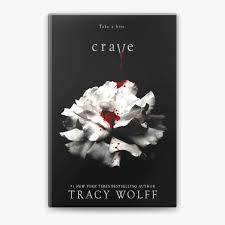
Fast forward to 2021: Freeman is in a bookstore when the cover catches her eye. It’s Crave, a bestselling vampire novel by Tracy Wolff. She buys it, starts reading, and is soon in a full panic. From the setting – Alaska – to the heroine to the magical relatives, a kidnapping, and a romantic tryst under the northern lights, it’s her story.
A quick Google search revealed that Wolff was a longtime client of Kim’s agency and that the book was published by a press that had turned down Blue Moon Rising. Freeman filed a lawsuit, alleging that her former agent and publisher had shared her manuscript with Wolff, who used it as a foundation for the wildly successful Crave series.
The problem(s)? There’s no paper trail. No emails, no documents, no notes linking Blue Moon Rising to Crave. Just Freeman’s certainty that her unpublished book had been mined for ideas—and the defendants’ equally certain denials that they’d ever seen it.
And the real catch: you can’t write in a genre like Young Adult Fantasy without using the same tropes. A young woman discovering hidden powers, a supernatural romance, a mystical connection to the wilderness (Alaskan or otherwise)—these aren’t just Freeman’s ideas, they’re genre staples. If originality alone were enough to claim ownership, Mary Shelley would hold the rights to every sci-fi book since 1816, and Edgar Allan Poe would have a legal stranglehold on detective fiction since 1841.
Tropes (recurring themes and structures) are not theft; they’re the foundation of entire literary traditions. The law protects expression, not ideas. Without hard proof, proving infringement is nearly impossible—especially in a market built on reworking, refining, and repackaging familiar elements.
Freeman and Wolff write in a genre teeming with the same tropes. Vampires and werewolves, lost princesses, chosen ones, the “enemies to lovers” arc—these are elements that have been recycled so many times that they’re practically public domain. In any event, no book in the genre is saleable without at least a half-dozen of these tropes. Readers expect them.
Freeman’s case is ongoing, and she had to sell her house to pay her legal fees. The lesson is clear: if you’re pitching a creative endeavor, protect yourself from the start. Have an experienced attorney review any and all contracts you’re offered. Freeman was a family attorney, but as her experiences in publishing made clear, she had no familiarity with the industry at all.
Don’t throw your idea or writings or technical sketches out there without protection. Lawyers are that protection. There’s at least a half-dozen ways Freeman could have been proactive from the start . . . in which case she might still have her home in Alaska.
Absence of Innocence
Not long ago, a town judge in New York was removed from the bench by the New York State Judicial Disciplinary Board because of a series of statements while he was considered for duty on a grand jury being seated in a nearby city.
First – a bit of arcane information from a state originally settled by the Dutch in the 1624 and has kept more than a few early colonial laws and practices alive and
well into the present day. One such vestige is the Town Court. Many tiny towns have courts to handle relatively minor traffic tickets and nuisance offenses like disorderly conduct, trespassing, and criminal mischief. The judges are elected and do not need to be attorneys. Non-attorneys elected to these judgeships must attend – we are not making this up – ‘Judge School’ before taking the bench. They take mandatory refresher classes every year.
Judge Richard Snyder left Petersburgh and its 1,372 residents to be voir dired in Albany. He did not want to serve as he was his late 60s, didn’t want to make the drive to Albany for however long the matter took and wanted to simply stay home and hang with his grandchildren.
None of that impressed the judge – who undoubtedly had heard it all before. Many times. Onto the questioning . . . which quickly went bad.
When asked if he understood what a grand jury did, the Judger answered, “Not really,” while adding that while he had never presided over a trial, he had taken part in annual training as required and had passed every test.
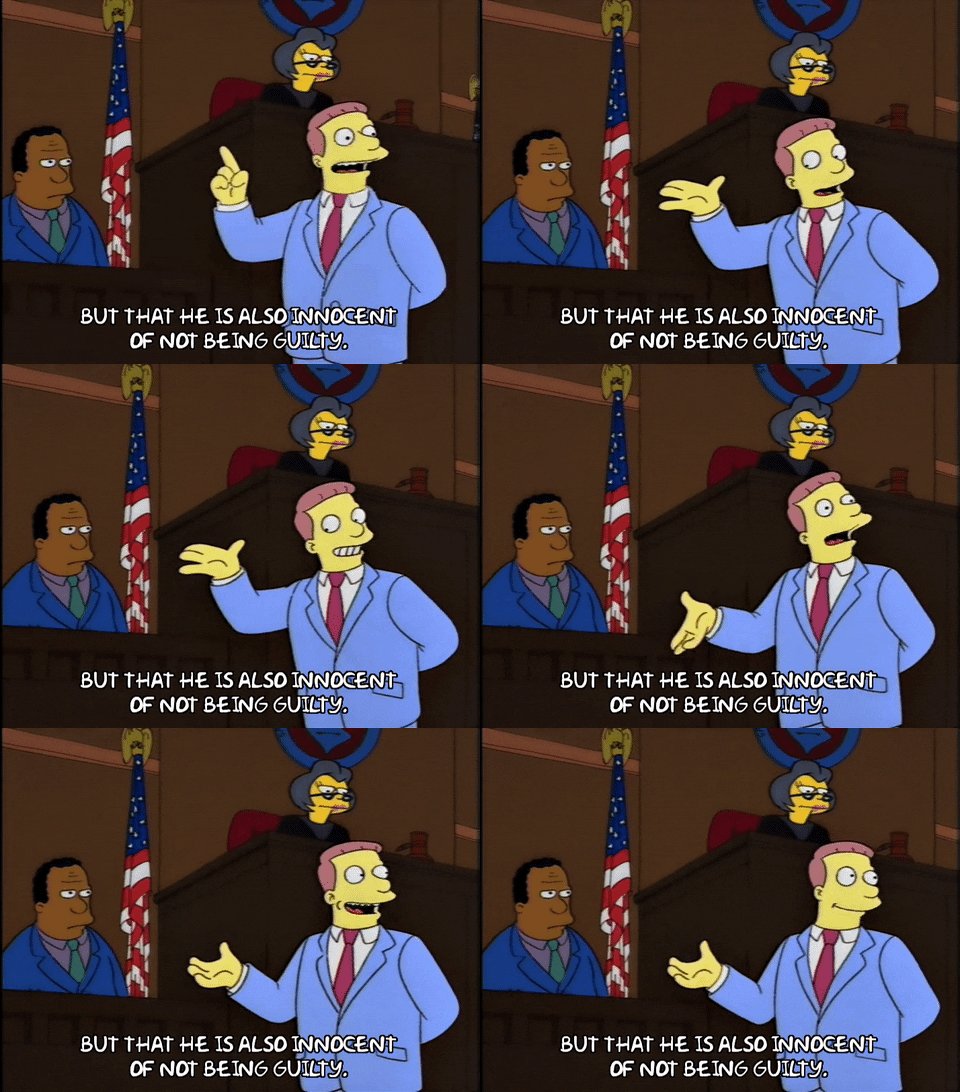
Then he added, “In my court, I treat everybody the same, equal, fair, honest,” he said. “I try to work with people, try to help them out. I take pride in my job . . . [even though] I know they are guilty, otherwise they would not be in front of me.”
That stopped the proceedings in their tracks. He was then quizzed on the fundamental premise of the criminal justice system that all people are innocent until proved guilty.
The judge insisted, several times, that he understood “but also made comments that indicated an imperfect grasp of the concept.”
Eventually he doubled down with, “I know they’re guilty because they did something wrong,” he said at one point. “That’s how they got a ticket.”
That was enough to get the judge tossed off the bench.
The thing that really jumps off the article is what a nice guy Judge Snyder seems to be. He genuinely seemed interested in helping the people who appeared in front of him. He probably had a nice courtroom presence.
But – and this is an enormous but – this in no way excuses his ‘they were arrested therefore they’re guilty’ philosophy. One that was surely known by the police, prosecutor, and court staff. Which, of course, complicates everything.
One of the reasons we’re writing about this is a belief that’s more prevalent than you would think. Some criminal justice advocates blame the forever running Law & Order franchises that has trained a couple of generations to “cheer for the police.” It should probably be noted that this view is almost universally held by individuals who have never had contact with the system.
It is something that we all need to remind ourselves of every once in a while . . . a brief look at the comments on almost any story about accusations or charges on the web
should reinforce this in a heartbeat.
Due Process is the bedrock of our judicial system . . . which makes our next article particularly infuriating.
“First thing we do . . .
. . . let’s ban all the lawyers from federal buildings.”
We are going to step back from our usual apolitical, ‘make the newsletter as entertaining as possible while staying relevant and keeping a light touch’ approach to address a serious – if not dire – matter: the targeting of law firms by Presidential Executive Order.
Over the last two weeks or so at least three large law firms have been the object of an Executive Order that, if upheld by the courts, would effectively cripple their ability to represent clients . . . if not force them to close their doors.
There’s a lot to those executive orders but we’re going to focus on just one – they seek to restrict the employees of the firms (note: more are sure to come) from “barring its attorneys from interacting with federal agencies or even entering federal buildings.”
There’s no precedent for these orders unless you consider James Dolan’s ban – enforced by facial recognition software – of lawyers from firms who opposed him in court over the years from Madison Square Garden and Knicks games.
Being banned from Knicks games (hardly a punishment before the 2023-24 season) has no effect whatsoever on the lawyers ability to represent clients. Being banned from federal buildings, including courthouses, obviously does.
Early last week, most of the provisions of a previous executive order targeting a law firm were blocked by a federal law judge who began by remarking, “I am sure that many in the legal profession are watching in horror at what Perkins Coie is going through here. The order casts a chilling harm of blizzard proportions across the legal profession.”
The only surprising thing about her opinion was that she decided to forgo the almost obligatory reference to Shakespeare’s Henry VI, Part 2 and went with Lewis Carroll:
“This may be amusing in ‘Alice in Wonderland’ where the Queen of Hearts yells, ‘Off with their heads!’ at annoying subjects … and announces a sentence before a verdict but this cannot be the reality we are living under.”
We agree, “this cannot be the reality we are living under.” We stand with the ABA, the state bars, and attorney organizations and associations that have already condemned this unconstitutional and unlawful attempt to cower the legal profession.

Don’t Miss an Issue
Haven’t subscribed yet? Agree with Homer? Then don’t miss another issue, subscribe now. And . . . if you know someone who may enjoy this, please feel free to forward this issue to them.