
Our Holiday Special
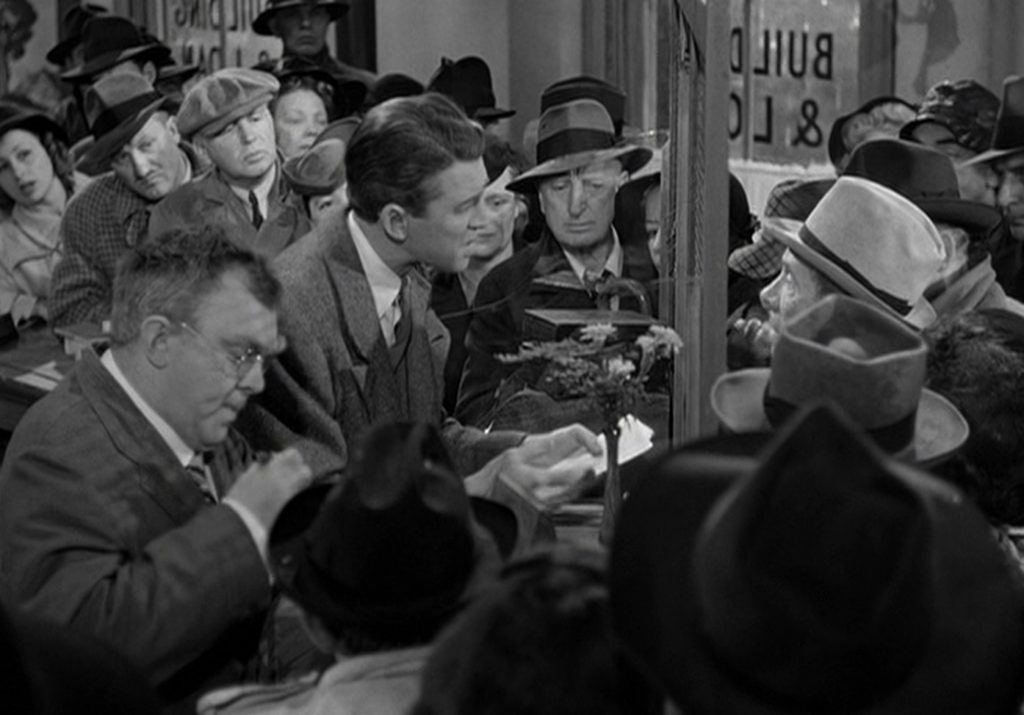
It’s mid-December, which means it’s time to decorate, bake some treats, and watch the classics: Elf, Christmas Vacation, Home Alone, A Christmas Carol (the version is up to you but, really, 1951’s Alistair Sim Scrooge the best), and, of course, Die Hard.
This is the time of year law firms around the country write clever articles about the business lessons of It’s a Wonderful Life while white collar defense attorneys and corporate general counsels run through all the possible crimes of Uncle Billy, George, and, of course, Mr. Potter.
Not us. Yes, it’s a great holiday movie; sure, the characters all the way down to Bert and Ernie are iconic; absolutely, it’s triumph of the ‘little guy’ after the community comes together to help theme is timeless and seemingly needed more and more every year.
But that’s all surface. Put down the eggnog, drop the iPhone, and watch the movie (preferably on the big screen) you may just notice it’s not what it seems. You’ll notice the rage bubbling under Jimmy Stewart’s George Bailey. The frustration, the haggard looks, the short temper that flares a few times long before Clarence shows up. There’s a discernable edge to George – it looks and feels like he’s really he’s losing it during the phone scene with Donna Reed in the first half of the film.
It looks real because it was: Jimmy Stewart was not acting; he was living the moment. Stewart had not appeared in a film since 1940. He left Hollywood for the Army Air Corps days after Pearl Harbor. He became a B-24 pilot, rose to command the 703rd Bomb Squadron, and flew 20 missions over Germany. In the fall of 1945, he returned to find that at least a half-dozen actors had taken over for him as a lead. Van Johnson was regularly filling his normal role as the clean-cut-boy-next-door (he, ironically, rose to fame portraying a bomber pilot in Thirty Seconds Over Tokyo). Stewart had few prospects. He also looked awful – his hair had started to turn gray, his face was lined, and he was thin and haggard.
We know today that he was suffering with PTSD. In a mission over Gotha, Germany in 1944, he lost 13 of 25 planes and 130 men. His ship was heavily damaged; the lower half of the fuselage directly below his pilot’s seat was blown away. He flew eight hours in -20 temperatures with nothing between him and the ground 18,000 feet below before safely landing.
In the release of a newly restored oral-history interview from the National WWII Museum, Stewart finally spoke candidly about the Gotha mission and admitted that it “never stopped replaying” in his head.
Frank Capra cast him as George Bailey because he looked the part – graying, haggard, with an edge. What we are watching on screens big and small, however, is not Jimmy Stewart acting – he’s living the movie.
The most recent 4K restoration of the film includes Capra talking about giving Stewart almost no directions because Stewart was, “closer to his breaking point than anyone realized.”
The underlying rage and edginess that is George Bailey is James Stewart. When he’s in Potter’s office, in the bar, and on the bridge, he’s not acting. Many of the scenes required only one take. Donna Reed claims that his tears were real.
His run through Bedford Falls – “Merry Christmas, movie house! Merry Christmas emporium!” – was as cathartic for Jimmy Stewart as it is for the audience. That made the film real and great, and it’s why it still holds people decades later.
No lessons here, just a great movie, go re-watch it and maybe you’ll learn something yourself.
Dickens’ Lawyers
We hope everyone is having a great week preparing for a joyful, fun, Christmas weekend with family and friends.
Here’s a thought as you put the last trim on the tree: we have a commercial transaction gone wrong, a collection action, solid estate planning, and copyright/intellectual property infringement to thank for the way we celebrate Christmas.
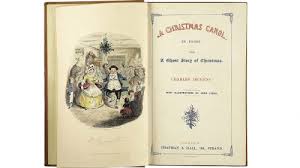
We’re talking, of course, about Charles Dickens and A Christmas Carol. Before A Christmas Carol, Christmas was not a holiday in the United States – not in any way we’d recognize today. The Puritans, not exactly renown for levity, banned the celebration of Christmas in 1659.
Christmas didn’t get much cheerier for the next 180 years in the U.S. It was considerably more fun and festive in the British Isles (they got rid of the Puritans, remember) and Europe.
The immense popularity of A Christmas Carol changed all that. It couldn’t have been written, never mind become an international bestseller, without the unique set of circumstances that led to its creation. Dickens grew up in a comfortably middle-class family. When he was twelve, his father suffered a series of business losses, creditors called the loans, when he couldn’t pay he was tossed into debtor’s prison. Charles’ mother and his younger siblings went with him.
Charles pawned his schoolbooks and went to a workshop to help pay off his father’s debts. An inheritance saved the family. Dickens went on to a regular education, then a job as a court reporter before becoming a successful novelist.
By 1843, Dickens was experiencing financial hardship – his publisher reneged on his contract and stopped paying royalties. His response was to write A Christmas Carol in six weeks and publish it himself in mid-December. If there had been such a thing as ‘going viral’ in 1843, his ghost story would have done so. It was an enormous hit. It ran through eleven editions in its first two years. Dickens raked in the cash.
Cheap publishers in the United Kingdom and the States soon began to produce illicit copies – universally cheap, full of errors, and missing chapters. Dickens sued, repeatedly, and won. More publicity for the book. He began to do stage readings, selling out large theaters. He turned the book into an event. He adapted it as a play and earned royalties for the rest of his life.
A Christmas Carol was (and still) is Dickens’ bestselling book in the U.S.. Americans heard, read, and saw how great celebrating Christmas could be. Trees, decorations, holiday cards, and gifts were close behind.
A little bit of a lot of the areas we practice in somehow combined to shape how we all celebrate Christmas.
Just think, we celebrate Christmas the way we do because Dickens had great lawyers.
The Grinch Grinches
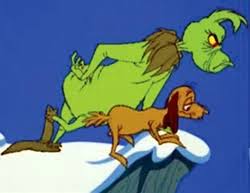
This time of year when holiday cheer,
Means pictures with the Grinch and Max this year.
Here’s a caution for you as you grin with glee,
That green, furry fellow doesn’t pose for free.
For the Suess family lawyers, not much for fun,
Do not love the costumes. Not even one.
They hate the copies, the cadence, the look,
Even Cindy Loo Who if she’s straight out of the book.
They hate the rhymes. They hate the pose.
They hate Max right down to his nose.
They hate the sets that look like Whoville by night,
They send desist letters even when it’s legally… slight.
“Now don’t ask us why,” say counsel with flair,
“We must stop it now, even if it’s only the fur or the stare,
Or posture, the eyebrows, or Boris Karloff’s beat.
We cannot tolerate verse that’s a bit too neat.
But we think that the reason — the simplest one all —
Is you drifted too close to the Grinch we control.”
Translation: Seuss Enterprises has sent cease and desist letters to photographers, malls, playwrights, lyricists, bands, writers, TikTok creators, and everyone and everything else you can possibly think of threatening legal action if any of these people/entities even lightly brushes up against any part of the How the Grinch Stole Christmas franchise. They make Disney look restrained. The rights [might] hit the public domain in 2052.
Don’t Miss an Issue
Haven’t subscribed yet? Agree with Homer? Then don’t miss another issue, subscribe now. And . . . if you know someone who may enjoy this, please feel free to forward this issue to them.