
… and the Right to AI Counsel

The story that follows this was supposed to be the lead article this week right up until publication time when news of a case out of the Southern District broke. Here it is:
Along with the rise of AI tools, people have started using ChatGPT/Claude, etc. as a go-to for legal advice, drafting letters, negotiation postures, forms, strategy, analyzing issues, exploring potential outcomes, and a lot more. They may want to slow down a bit – a federal judge just issued an opinion that should give everyone – and we mean everyone – deep concerns about even considering this in any matter that could end up in litigation.
In United States v. Heppner, decided last week, Judge Jed Rakoff ruled that a defendant’s conversations with a consumer generative-AI tool (in this case Anthropic’s Claude) are not protected by attorney-client privilege and are not protected as work product. The court’s view was direct: an AI tool is not a lawyer. Nothing you tell it is protected by attorney-client privilege. Nor is it the work-product of an attorney because the materials most certainly weren’t prepared by an attorney or at an attorney’s direction. The judge’s ruling left no wiggle room whatsoever.
If you want to see how this can go sideways in any civil or business dispute, you don’t need imagination. You only need discovery.
AI users tend to go all in. They draft timelines. They list accounts. They describe what was said on that call, what was sent by text, which messages were deleted, what they suspect about money, what they know about wrongdoing, what they think the other side will claim, and what they plan to say when the heat turns up. The AI will not stop them, it will encourage them to give more.
The Heppner ruling is a reminder that “privacy” and “privilege” are very, very different things. Attorney-client privilege is a narrow, specific protection for confidential communications between a client and a lawyer for the purpose of legal advice. An AI chatbot is a third party. Even if it feels like a private conversation, it is not.
Opposing counsel asks for your notes, drafts, “communications with third parties,” and anything you used to “prepare” your position. If you have been using consumer AI tools like a diary, you’ve potentially created a neat, time-stamped record of your strategy, your fears, your leverage points, the things you planned to claim, and the things you hoped nobody would ask about. In Heppner, prosecutors fought for those AI documents and got them.
There’s also a second, quieter problem: people paste into AI the very thing they most need protected—what their lawyer told them. Repeating legal advice into a public AI tool will waive the privilege that originally attached to that advice. It’s the most natural thing in the world: you paraphrase counsel, you ask the bot to “explain it,” and you accidentally build a discovery record out of privileged conversations.
None of this means “never use AI.” It means don’t treat AI like a locked conference room. Use it for public, generic questions—terminology, process, checklists you could safely print on a billboard. Do not use it to workshop your facts, your settlement posture, your negotiation strategy, or the story you’re going to have to live with under oath.
The old rule in litigation was: don’t put anything in writing you’d be embarrassed to see on a courtroom screen.
The new rule is: don’t put anything in an AI chat you’d be embarrassed to see on a courtroom screen.
An AI Frog
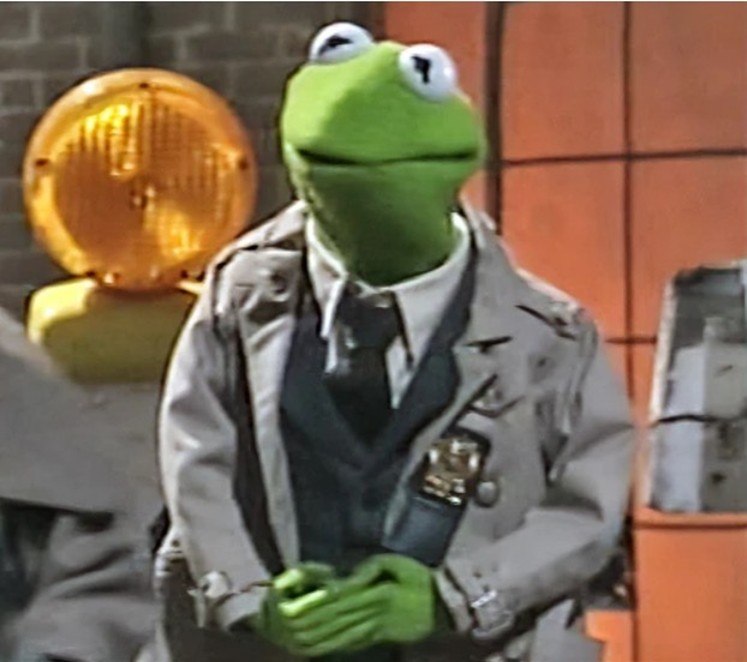
Artificial intelligence is not coming to criminal law. It is already here, and it is being introduced at the worst possible points in the process, by the people least equipped to understand its limitations, inside a system that already struggles with bias, shortcuts, and accountability.
If you doubt that, well, check out this simple body-camera incident: a police department started using an AI tool designed to help draft reports directly from body-cam footage. The software analyzed the footage, picked up audio from a movie playing in the background, and confidently recorded that the officer “turned into a frog” during a traffic stop that turned into an arrest.
Funny, yes. Absurd, undoubtedly. But revealing because the AI did exactly what it was designed to do: interpret data in a vacuum, guess context, and present the result as fact. That is not a harmless glitch, it is a fundamental problem.
Police reports are the foundation of criminal cases. They shape probable cause, charging decisions, bail, conditions, and narrative. If AI is used to summarize, interpret, or “clean up” those reports, even as a drafting aid, its errors are not jokes. They look official. They look authoritative. Unless someone catches them early, they become part of the permanent record.
Then the case moves to the prosecutor. Prosecutors are already under pressure to move cases quickly. AI tools are being marketed to them as efficiency solutions: summarizing evidence, identifying “relevant” facts, prioritizing cases, and drafting charging documents. Great, but the same problems bedeviling AI in the wild are certainly still there in prosecution offices.
AI does not understand disclosure obligations – or, maybe it does but has taught itself to tilt toward ensuring convictions There have already been reported cases (which, in criminal law context, inevitably means there are a dozen more unreported) in which AI has hidden Brady material from the defense. (Brady material is any piece of evidence that may exonerate the defendant – like a DNA test). AI does not, in any meaningful sense, recognize what is exculpatory versus what’s inconvenient for the prosecution. It optimizes for relevance as defined by its training, and that training overwhelmingly reflects prosecutorial narratives.
That means information that complicates the case, undermines the theory, or favors the defense is at real risk of being minimized, deprioritized, or dropped entirely before a human ever sees it. Not out of malice. Out of design.
Judges are beginning to encounter AI not just in briefs and filings, but in their own drafting processes. Courts have already acknowledged cases where AI tools inserted fabricated citations, misstatements of law, or invented facts into legal writings including judgments. When that happens in a blog post, it’s embarrassing. When it happens in criminal case, it’s dangerous and life changing.
A judge relying on AI output without rigorous verification is not exercising discretion. They are delegating to a machine that does not understand stakes, liberty, or consequences.
Put all of this together and you get a pipeline problem.
AI touches the stop.
AI shapes the report.
AI influences charging.
AI filters disclosure.
AI seeps into judicial reasoning.
Each step compounds the last, but with greater impact – like the Richter Scale. Each error hardens into “fact.” Because the system already treats early narratives as sticky, AI errors are not self-correcting. They are self-reinforcing.
This is why experience matters more now than it did even five years ago.
An experienced criminal defense lawyer in 2026 is not just arguing law. These days, we are looking for AI artifacts. We question how documents were generated. We examine what tools were used, what data was excluded, and what assumptions were made before the case ever made it to the courtroom.
We know where AI tends to hallucinate, oversimplify, and quietly bias outcomes. And we know how to force the system to slow down and account for those failures.
The future of criminal defense is not fighting AI itself. It is fighting unexamined reliance on it.
And only lawyers who understand both the law and the technology shaping it will be able to do that effectively.
Apple’s The Hunt
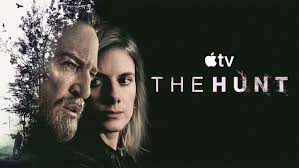
Apple TV is releasing The Hunt, next week, its much delayed French thriller. Much delayed because, unbelievably, apparently everyone – director, producers, writers, show runners – though the others had done their due diligence on, well, the story.
The Hunt – with a great French Director and superb actors was announced over a year ago to great fanfare as another Apple TV prestige production. It was scheduled to debut on December 3, 2025. Trailers were released, a ‘coming soon’ ad popped up on Apple every time you logged in counting down the days. Then, sometime in September all that simply vanished.
Apple said nothing even as people began to notice. Dead silence.
It turned out that while the average Apple TV viewer barely noticed the ads, they had very much grabbed the attention of a French journalist, Clément Garin. Something struck a chord with him, he began to do a little research. It didn’t take too long before he found that Apple’s ‘next big show’ tracked awfully close to Douglas Fairbairn’s 1973 hardcover and mass market paperback bestseller, Shoot—which was translated into French as La Traque (which itself translates to The Hunt). It was certainly the same story. That Fairbairn’s book had been adapted into a 1976 film starring Cliff Robertson and Ernest Borgnine, sealed the deal – The Hunt had major league plagiarism issues.
Before Garin published his story he gave Apple and the production company, Gaumont, a heads up. They hit the pause button and launched an internal review.
That review confirmed Garin’s research.
In short order Gaumont announced that it had reached an agreement to ‘secure the rights’ to the novel. While the details of the settlement with, presumably Fairbairn’s estate, are confidential, we can make an educated guess that it cost. A lot. Why?
Because it’s a lot more expensive to do due diligence and pay for the rights to a work after you’ve already poured millions into the project and not only scheduled release but promoted it every chance you had than it would have been at the ‘I’ve got a great idea stage.’ We can only envy the leverage the rights holder had sitting down with Gaumont and Apple attorneys.
Moral of the story: do your due diligence early and often.

Don’t Miss an Issue
Haven’t subscribed yet? Agree with Homer? Then don’t miss another issue, subscribe now. And . . . if you know someone who may enjoy this, please feel free to forward this issue to them.